
Casco Viejo Boundaries: What Is Truly Casco Viejo and Why It Matters for Visitors
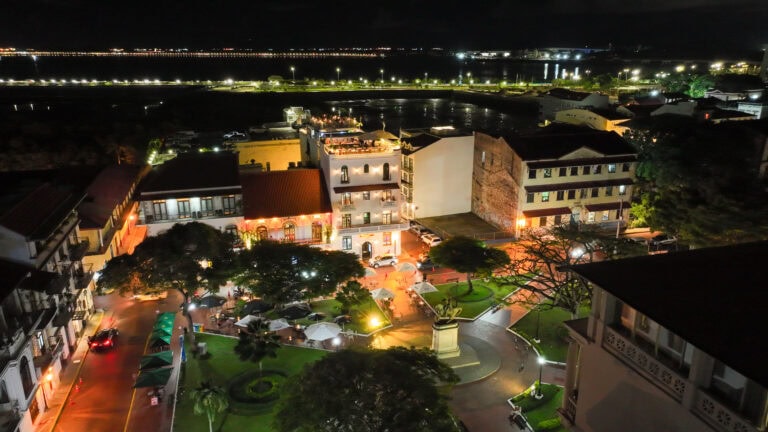
Casco Viejo is one of the most compact, walkable, and complete historic districts in the Americas. It functions the way it does because it is clearly defined, carefully protected, and managed as a living neighborhood rather than an open-ended tourism zone. Visitors often sense that difference immediately, but many do not understand what creates it. The reason is not atmosphere or branding. The reason is boundaries. Knowing the importance of Casco Viejo boundaries enhances the visitor experience immensely.
Confusion surrounding Casco Viejo rarely originates within the district itself. It begins with how the name is stretched, reused, and casually applied to adjacent areas that operate under entirely different conditions. Maps soften the edges. Listings expand geography. Proximity is marketed as inclusion. The result is that visitors arrive expecting a specific experience and discover they are outside the systems that support it.
This article exists to clarify what Casco Viejo actually is, where it begins and ends, and why those boundaries matter for anyone visiting Panama City. Understanding Casco Viejo boundaries improves walkability, safety expectations, accommodation decisions, and the overall quality of a visit. It also protects the integrity of the community that people live in every day.
Boundaries Are Real, Not Symbolic
Casco Viejo, formally known as San Felipe, is a legally protected historic district with UNESCO World Heritage status. That designation is operational, not decorative. It governs restoration standards, building use, traffic flow, noise levels, public space management, and coordinated safety. These systems function only because the district is contained.
Casco Viejo was never intended to expand indefinitely. It was designed to preserve a human-scale environment where residents, visitors, commerce, and culture coexist within a walkable footprint. That balance depends on boundaries. When boundaries are treated as flexible or symbolic, the systems that protect daily life and visitor experience weaken quickly.
Many visitors assume Casco Viejo is a broad historic “area” rather than a defined neighborhood. That assumption is understandable, especially in cities where historic zones blur into surrounding districts. In Casco Viejo, that is not the case. Inside the boundary, conditions are managed. Outside the boundary, they are not. That distinction shapes everything from how people move to how safe they feel.
Official Boundaries for Visitors
Casco Viejo’s historic enclosure runs from Calle 1ª Oeste to Calle 12ª Oeste. This is the foundational fact that anchors the entire discussion.
The boundaries are clear:
- East–West: Calle 1ª Oeste to Calle 12ª Oeste
- North: Avenida Central
- South: The Pacific Ocean and the coastal seawall
- East: Plaza de Francia and Paseo Esteban Huertas
- West: Calle 12ª Oeste
Anything beyond Calle 12ª Oeste is not Casco Viejo. It may be adjacent. It may share history. It may develop further over time. Today, it is outside the district.
This matters because tourism expectations are built around what Casco Viejo provides. Walkability, lighting, visible security, pedestrian flow, and a consistent urban rhythm all exist within this defined perimeter. When visitors stay outside the boundary while expecting inside-the-boundary conditions, disappointment follows.
Important Safety Note: Cinta Costera Walk
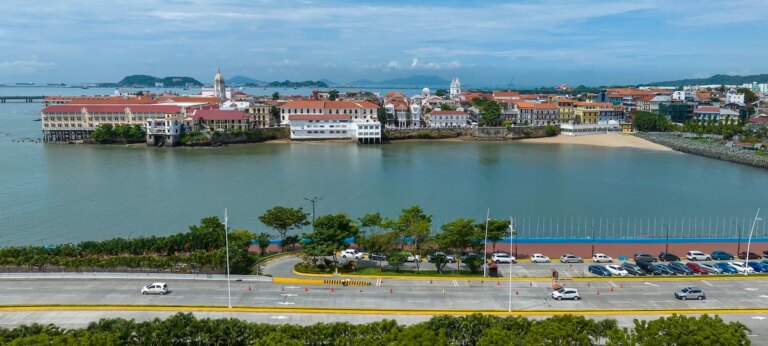
Walking the pedestrian path along Cinta Costera III from the Casco Viejo entrance offers excellent views of the historic district and is well worth doing.
However, conditions change once you pass the designated Cinta Costera viewpoint. Beyond this point, you are no longer within the managed Casco Viejo perimeter. Lighting, security presence, and pedestrian traffic drop off quickly.
I personally know several people who have been robbed on this stretch after passing the viewpoint. In Panama, a mobile phone can represent several months’ salary, which makes opportunistic theft a real risk in low-traffic areas.
The recommendation is simple: enjoy the walk up to the viewpoint, then turn back toward Casco Viejo. Do not continue past this point on foot.
Safety conditions can change over time. This guidance reflects local experience and current conditions at the time of writing.
Explore Casco Viejo
On Your Own Time
This self guided walking tour is designed to last up to four hours, but you set the pace. Do it in one relaxed half day, or break it into a few stops between coffee, meals, and photos.
- No groups, no schedules
- Start anywhere, stop anywhere
- Works on phone or desktop
Why Walkability Works Here
Casco Viejo is frequently described as walkable, and that description is accurate. What is less often explained is why walkability works here so consistently.
Within Casco Viejo boundaries, streets are intentionally narrow. Vehicle speed is naturally reduced. Traffic is tolerated rather than prioritized. Lighting is consistent. Public plazas anchor pedestrian movement. Police presence is visible and coordinated. Walking is not an afterthought. It is the primary mode of movement.
This environment does not occur by chance. It exists because Casco Viejo is treated as a single, managed ecosystem. Pedestrian flow is expected. Commercial activity is regulated. Public space is protected. Visitors feel comfortable walking because the neighborhood was designed and governed for that purpose.
Once you cross Avenida Central or pass Calle 12ª Oeste, those systems stop operating as a unified whole. That does not make the surrounding areas unsafe or unworthy. It simply makes them different. Walkability is not guaranteed by proximity alone.
What Changes Immediately Outside Casco Viejo Boundaries
The transition is often subtle visually but significant operationally. Outside Casco Viejo, there is no unified pedestrian plan. Lighting standards vary block by block. Traffic patterns change abruptly. Security presence is no longer coordinated around visitor movement.
This does not mean areas outside Casco Viejo are dangerous. It means they are unmanaged from a tourism perspective. Visitors must rely on individual judgment rather than shared infrastructure.
Tourism thrives on predictability. Casco Viejo provides that predictability within its perimeter. Outside it, the city behaves like a city. That distinction becomes most apparent at night, during rain, or for first-time visitors unfamiliar with Panama City’s rhythms.
Will Casco Viejo Ever Extend Beyond 12th Street?
Possibly, at some point in the future. That future does not exist today.
Extending the Casco Viejo experience requires more than new businesses or marketing language. It requires infrastructure investment, coordinated safety systems, pedestrian planning, lighting standards, and regulatory alignment. It also requires community consensus from residents who live in the district full-time.
Expansion driven by branding rather than policy creates false expectations. False expectations damage visitor trust and strain community relationships. Responsible tourism planning must reflect current conditions, not speculative narratives.
Today, Casco Viejo ends at Calle 12ª Oeste. Visitors should plan accordingly.
What Casco Viejo Policies Protect — and Where They Stop
Casco Viejo policies exist to protect the balance. They regulate restoration, noise, commercial density, traffic flow, and public space use. These rules protect residents and visitors alike by preserving livability.
These policies stop at the boundary. That is not neglect. It is a jurisdiction. Outside Casco Viejo, different rules apply, enforced by different authorities with different priorities.
Visitors who stay inside Casco Viejo benefit directly from these protections. Visitors who stay outside do not. Understanding this distinction allows travelers to make informed decisions rather than relying on loosely applied labels.
Why Some Listings Blur the Casco Viejo Boundary
Casco Viejo carries recognition, and recognition has commercial value. As a result, proximity is often marketed as inclusion.
Search platforms reward broad geographic language. Developers benefit from association. “Near Casco Viejo” becomes “Casco area,” which becomes simply “Casco.” None of this alters geography.
This is not a critique of development or ambition. It is a clarification of language. Proximity is not the same as being inside the district, and visitors deserve accuracy when choosing where to stay.
How to Confirm You’re Inside the Historic Core
There are practical ways to verify location without relying on marketing copy.
A property inside Casco Viejo will list San Felipe as its neighborhood. It will fall between Calle 1ª Oeste and Calle 12ª Oeste. It will be walkable to Plaza Catedral within ten minutes. Streets will show protected historic façades. Vehicle traffic will be slowed or restricted.
If these conditions are not met, the property is outside Casco Viejo. That does not make it inferior. It makes it different.
Fast Facts: Casco Viejo Boundaries for Visitors
- Casco Viejo is a walled historic district, officially known as San Felipe
- The district runs from Calle 1ª Oeste to Calle 12ª Oeste
- Casco Viejo is fully walkable within its defined boundaries
- It is separate from Santa Ana and adjacent neighborhoods
- Heritage protections and pedestrian controls apply only inside Casco Viejo
- Restaurants, hotels, bars, and shops operate under shared district policies
Frequently Asked Questions (FAQ)
Casco Viejo is best known for its UNESCO World Heritage status, colonial architecture, walkability, and concentration of boutique hotels, restaurants, museums, and rooftop bars within a compact historic district.
Yes. Casco Viejo is one of the most closely monitored and secure neighborhoods in Panama City. It is heavily patrolled, well-lit, and designed for pedestrian movement, making it comfortable for visitors day and night.
Plan at least half a day for a first visit. One full day allows time for museums, dining, churches, and walking the neighborhood. Many visitors stay 2–3 nights to fully experience the area at different times of day.
Absolutely. Casco Viejo was built for human-scale movement. The entire district is walkable, with hotels, restaurants, churches, museums, and plazas all within minutes of each other.
Yes. Families enjoy museums, open plazas, historic churches, waterfront walks, ice cream shops, and cultural sites. It’s compact, educational, and easy to navigate with children.
Panama City refers to the modern metropolitan area with skyscrapers and business districts. Casco Viejo (also called San Felipe) is the historic heart of the city — intimate, cultural, and experience-driven.
Casco Viejo is enjoyable year-round. Mornings are calm and atmospheric, afternoons are lively, and evenings bring dining and rooftop energy. Even during the rainy season, the neighborhood remains active and walkable.
Yes. Most restaurants, cafés, and shops operate throughout the week, including Sundays, though hours may be shorter in the morning. Check on openings on Mondays
Why Casco Viejo Works as a Complete Community
Casco Viejo did not reach its current state by accident. The community and service industry have spent years restoring buildings, filling gaps responsibly, and developing businesses that respect both residents and visitors. What exists today is the result of deliberate effort rather than speculative growth.
Over time, Casco Viejo achieved something rare. Its edges became as strong as its center. Restaurants, hotels, bars, and shops now form a continuous experience from one end of the district to the other. The neighborhood feels complete rather than fragmented.
At the western edge of Casco Viejo, Aya La Vida Restaurant has become a defining anchor. It marks, in a very real and practical way, where Casco Viejo both begins and finishes. Its classical approach to Panamanian food, rooted in tradition rather than trend, has earned consistent praise and strong reviews. More importantly, the ownership’s visible commitment to the community reflects the values that make Casco Viejo work.
In many historic districts, the final edge is the weakest point. In Casco Viejo, it has become one of its strengths. A great district requires a strong finish, not just a strong center. Aya La Vida provides that finish. It completes the narrative of the neighborhood in the same way a final chapter completes a book.
Why There Is No Reason to Leave Casco Viejo to Complete the Experience
This pattern is familiar. When I lived in Palm Springs, California, the city was part of a larger desert region made up of nine distinct communities. For promotional purposes, developers and businesses routinely leveraged the Palm Springs name even when they were not located within Palm Springs itself. Proximity was marketed as inclusion because the name carried weight.
The same behavior now appears around Casco Viejo. Adjacent areas borrow the name because it carries recognition. That does not diminish those neighborhoods, but it does create confusion for visitors expecting a specific environment.
The difference in Casco Viejo is that there is no practical reason to leave the district to find what you need. Casco Viejo already contains restaurants, hotels, bars, gift shops, cultural venues, and daily services within a walkable footprint. It functions as a complete destination.
Understanding this is not about exclusion. It is about accuracy. Casco Viejo works because it is whole, defined, and respected.
Understanding Casco Viejo Boundaries Improves the Experience
Casco Viejo delivers what visitors expect because it is protected. That protection stops at the boundary. Understanding where Casco Viejo begins and ends allows visitors to plan intelligently, choose accommodations wisely, and move through the city with realistic expectations.
Casco Viejo is not defined by branding language. It is defined by geography, policy, and lived experience. Inside the boundary, the experience is cohesive and walkable. Outside it, the city functions differently.
That distinction is not exclusion. It is accuracy. Casco Viejo is not a brand. It is a place.
- Read the full story behind the morning rhythm at the Casco Viejo Fish Market—this is Casco before it performs for the day.
- Plan your time properly with the Casco Viejo Visitor Guide, designed to help you pace the neighborhood instead of rushing it.
- For the deeper perspective, read What Visitors Get Wrong About Casco Viejo. It explains exactly why places like the Fish Market matter, and why boundaries shape the experience.
Out and about with James.
Aya La Vida Restaurant
Explore the western edge of Casco Viejo, anchored by Aya La Vida Restaurant at the neighborhood’s new entrance.
Explore AreaCoffee Shops in Casco Viejo
From early-morning espresso to relaxed afternoon cafés, discover where locals and visitors stop for great coffee in Casco.
Find CoffeeArts & Gifts in Casco Viejo
Browse locally made art, handmade gifts, and cultural pieces that reflect Casco Viejo’s creative and artisanal spirit.
Explore ShopsSimilar Posts
First Time Visiting Casco Viejo

First Time Visiting Casco Viejo: What to Expect Hour by Hour First time visiting Casco Viejo often feels easier…
No Hype, Just Great Restaurants: Dining in Casco Viejo
No Hype, Just Great Restaurants: Dining in Casco Viejo If there’s one thing I’ve learned after 15 years of…
Panama layover Casco Viejo
Layover in Panama City: A Perfect Day in Casco Viejo This isn’t a layover; it’s an intermission that can…
casco cat community panamá
Casco Cat Community Caring for Casco Viejo’s Cats Casco Viejo’s Cats and the People Who Care Casco Viejo’s (also…
Destination Weddings in Casco Viejo
Destination Weddings in Casco Viejo: What Couples Really Need to Know With a history of planning weddings, I can…
behind the reviews
Behind the Reviews: How I’ll Approach Casco Viejo’s Dining Scene Casco Viejo also known as San Felipe has become…