
The Casco Viejo Community: The People Who Keep This Historic District Moving
There is a version of the Casco Viejo Community that greets you immediately.
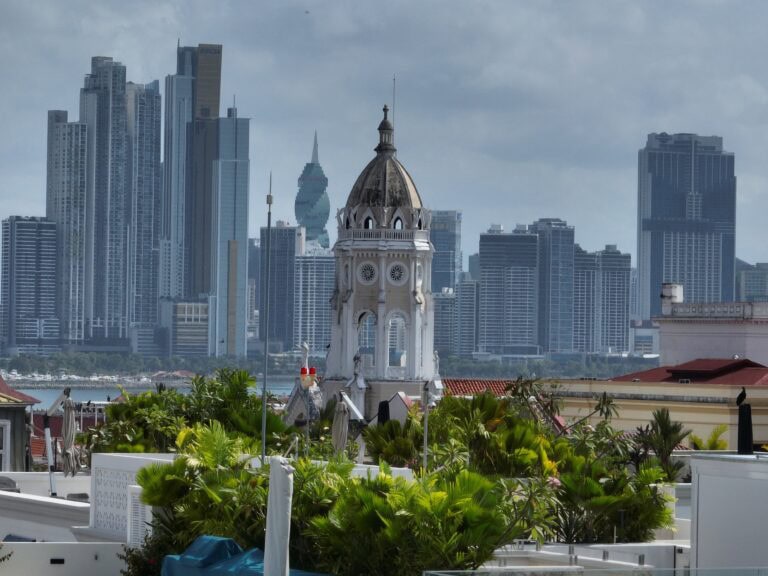
Colorful façades lean toward the sea. Rooftop terraces glow at sunset. Cathedral plazas frame centuries of architecture against the rising skyline of modern Panama City. It feels composed, almost cinematic, as though the district arranged itself carefully before you arrived.
But that surface impression tells only part of the story.
The reason Casco Viejo works and continues to grow without losing its balance lies underneath the paint, beyond the balconies, behind the music. It lies in the daily rhythm of the Casco Viejo community. In the people who show up before sunrise. In the workers who reset the plazas before the tours assemble. In the residents who treat these streets not as a spectacle, but as home.
I have lived in this neighborhood since 2008. I have watched restoration take hold, investment accelerate, and international attention shift toward these forty acres bordered by water on three sides. Through every stage of growth, one truth has remained steady. Buildings matter. Atmosphere matters. But people sustain a district.
This is the first time I have chosen to document Casco Viejo entirely in black-and-white. Not for nostalgia. Not for drama. But for clarity. Color seduces quickly. Black-and-white removes distraction. It reveals posture, repetition, effort, and discipline. It shows the structure that allows this historic district to feel effortless.Casco Viejo is not a museum. It is not a backdrop. It is a living neighborhood layered with tourism, hospitality, culture, and residence. Understanding that balance requires looking past the façade and into the people who keep it moving


Morning Within Casco Viejo
Casco Viejo is most honest in the early morning.
Before cruise visitors filter into plazas. Before guides gather groups along the sea wall. Before espresso machines hum and music drifts from open windows. Morning belongs to the workers of the Casco Viejo community.
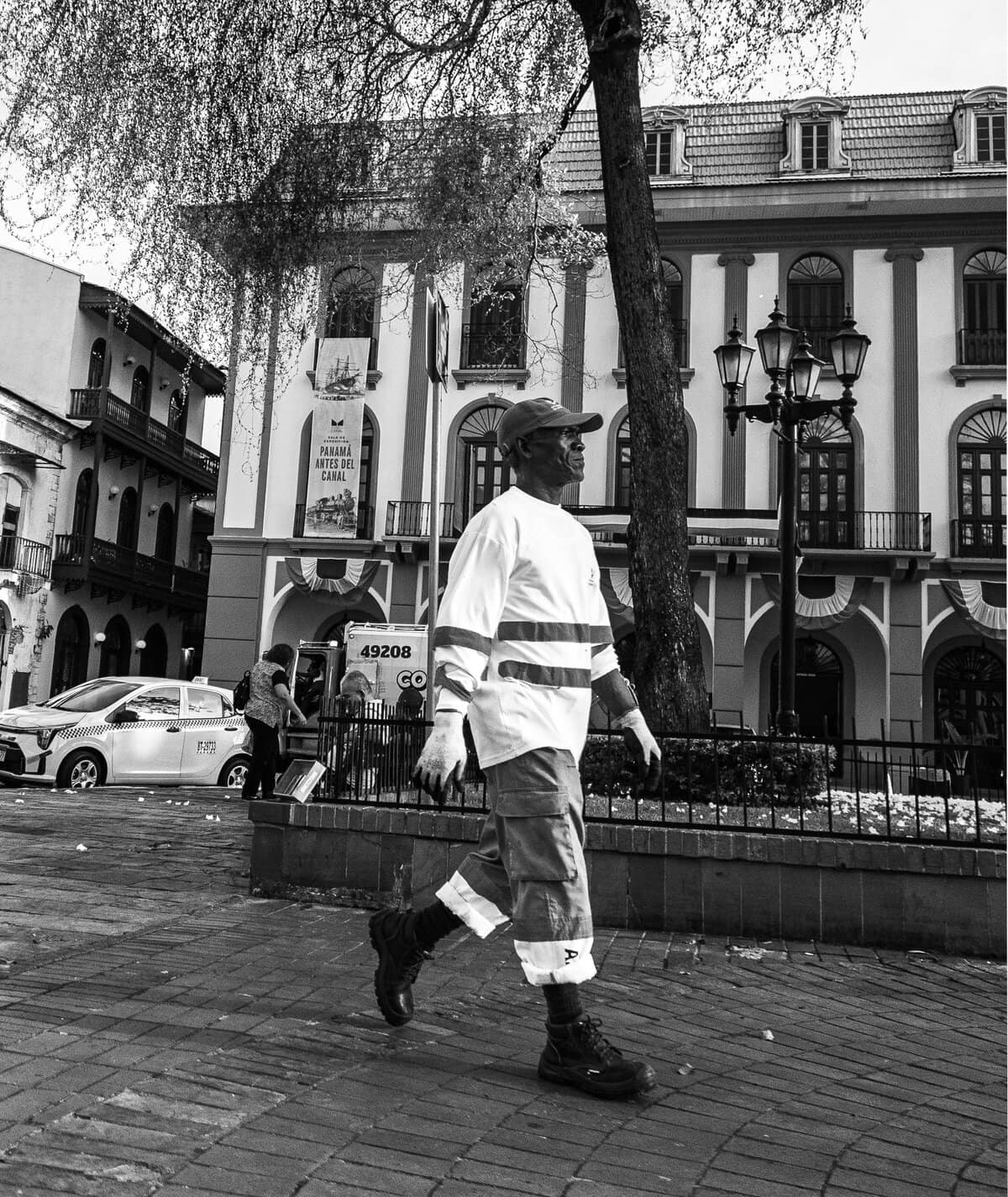
A man in reflective stripes crosses the bricks with deliberate pace. His movement is neither hurried nor dramatic. It is practiced. He walks like someone who understands that maintenance must be invisible to be effective. He is not posing. He is carrying responsibility.
Security shifts rotate quietly. Deliveries navigate narrow streets that were never designed for modern vehicles. Corners are checked. Bins are cleared. Doors are unlocked. The district resets itself through repetition.
Visitors often describe Casco Viejo as clean, welcoming, and comfortable. Those impressions are not accidental. They are constructed daily by the Casco Viejo community through small, consistent acts that rarely attract attention.
Tourism may be visible, but discipline is what sustains it.
Casco Viejo does not wake up by coincidence. It wakes up because people return every morning and repeat the work.

The Invisible Exchanges Inside Casco Viejo
There are conversations that never make it into photographs.
A guard nods to a delivery driver who has arrived at nearly the same minute for years. A housekeeper pauses briefly at a balcony to study the weather rolling across the Pacific. A musician adjusts a strap before rehearsal, not for performance, but for habit. These are quiet gestures, but they form the connective tissue of the Casco Viejo community.
Historic districts often present themselves as finished products. Casco Viejo does not. It is constantly in motion. The district you experience at noon is not the same district that existed at six in the morning. Floors have been swept. Chairs have been set. Streets have been walked multiple times by the same people who understand that consistency is protection.
From the outside, visitors see architecture. From within the Casco Viejo community, residents see maintenance. They see labor. They see repetition. And repetition is what keeps a neighborhood from collapsing into spectacle.
The success of Casco Viejo is not accidental. It is sustained through invisible exchanges that repeat daily without announcement.
The Working Backbone the Casco Viejo
Historic districts are frequently described as charming. Casco Viejo is charming. But charm does not operate in a neighborhood.
Black-and-white photography makes that structure visible. You notice boots pressing against stone. You notice hands gripping tools. You notice the quiet exchange between colleagues before a shift begins.
None of these moments is theatrical. All of them are essential.
Casco Viejo functions because tourism and daily life operate in parallel. Residents pass through plazas alongside visitors. Workers prepare venues while guests photograph balconies. Culture and commerce coexist without collapsing into performance.
The Casco Viejo community is not decorative. It is operational. That distinction is what separates sustainable growth from superficial popularity.


Tradition and Continuity in the Casco Viejo
Casco Viejo did not begin when boutique hotels opened. It did not begin when international articles declared it Panama’s cultural heart. It did not begin when cruise ships increased their frequency.
The Casco Viejo community existed long before its current spotlight.
A woman in traditional dress leaning against a doorway carries more than patterned fabric. She carries an inheritance. The design she wears reflects lineage and identity. She is not staged for effect. She is present in her own neighborhood.
Statues commemorating educators and civic figures stand against restored façades. They remind you that the district has always been about more than tourism.
UNESCO designation protects architecture. The Casco Viejo community protects culture.
Without residents, preservation becomes hollow. Without continuity, restoration becomes cosmetic. Casco Viejo avoids that outcome because the neighborhood remains inhabited.
Families still move through plazas with groceries. Apartments sit above restaurants. Conversations in Spanish unfold that have nothing to do with visitors. This is not a district that exists solely for photographs.
It exists for itself first.


Growth and Balance Inside the Casco Viejo Community
Growth is visible, and there is no reason to deny it. Casco Viejo has become a destination of choice within Panama and increasingly abroad. Conference guests from the Panama Convention Center explore its streets. International travelers build itineraries around it. Cruise passengers dock nearby and walk along the waterfront.
Growth brings energy. It also brings scrutiny.
Is it over-tourism?
Is it still authentic?
Is it sustainable?
From within Casco Viejo, the answer is measured. The district spans roughly forty acres. It is compact, walkable, and bordered by water. Its scale naturally limits excess. Movement happens on foot. Encounters happen organically.
Casco Viejo runs close to twenty-four-hour activity, yet it remains structured rather than chaotic. Morning transitions into afternoon tours. Afternoon shifts into evening dining. Night settles into conversation rather than frenzy.
It is a neighborhood best understood slowly, on foot, at your own pace which is precisely why a self-guided local walking experience reveals far more than a rushed group circuit ever could.
The Casco Viejo community absorbs growth because its foundation remains human-scaled. That scale protects it.


Pressure And Perspective Within Casco Viejo
Every destination that gains attention faces a moment of tension.
Growth accelerates. Media narratives sharpen. Outside observers attempt to categorize what they do not fully understand. The Casco Viejo community has experienced that scrutiny. It is impossible to grow without it.
But scale matters.
Casco Viejo spans roughly forty acres. That measurement is not just geographic. It is psychological. Movement happens on foot. Streets narrow naturally. Encounters are inevitable but brief. The design of the district prevents the overwhelming compression seen in larger global destinations.
There are no cruise terminals embedded inside the neighborhood. There are no bus lanes cutting through plazas. There are no mega-resorts swallowing entire blocks. The Casco Viejo community absorbs attention because its physical boundaries create discipline.
Growth here feels layered rather than explosive. Restaurants open. Cultural spaces evolve. Residents remain. Investment arrives without displacing the entire identity of the district.
This is not accidental balance. It is structural.


The Daily Rhythm of the Casco Viejo Community
Spend enough time here and patterns become familiar.
The same worker crosses the plaza at nearly the same hour each morning. The guard rotating shifts just before dusk. Musicians gathering, dispersing, gathering again. Residents leaning from balconies to observe the changing weather over the Pacific.
The Casco Viejo community functions through repetition. Repetition builds reliability. Reliability builds comfort.
Visitors feel that comfort even when they cannot articulate why.
There is a beach within walking distance. Offices operate behind colonial façades. Long-term residents have witnessed a transformation from uncertain restoration to a confident destination.
Casco Viejo adapts. It negotiates growth. It welcomes new restaurants and cultural initiatives. But its rhythm remains steady.
That steadiness is what prevents growth from overwhelming it.


Evening Light and Casco Viejo
As dusk settles, Casco Viejo softens but does not surrender.
Water presses gently against the sea wall. Interior lights glow through restored windows. The skyline across the bay flickers into clarity. Couples attach padlocks to railings overlooking the Pacific.
Meanwhile, the Casco Viejo community continues its routine. Kitchens close in stages. Staff complete checklists. Security maintains presence without intrusion.
Black-and-white removes romantic distraction. Without color, you notice stillness after motion. You notice posture in silhouette. You notice the continuity between day and night.
The district does not become a spectacle at sunset. It remains itself.
Continuity, not drama, defines the Casco Viejo community.


Fast Facts About Casco Viejo
- Approximately 40 acres
- UNESCO World Heritage designation
- Located within Panama City overlooking the Pacific Ocean
- Walkable district bordered by water on three sides
- Mix of residential, hospitality, retail, and cultural spaces
- Five to ten minutes from downtown Panama City
- Approximately twenty-five minutes from Tocumen International Airport
- Active from early morning through late evening
- Popular with cruise guests, conference visitors, and independent travelers
- Home to long-term residents and daily commuters
Questions People Ask the Casco Viejo
Yes. Residents remain central to the district. Apartments and family homes coexist with hotels and restaurants.
The neighborhood maintains a visible security presence and consistent foot traffic. It is widely regarded as one of Panama City’s safest walkable districts.
Growth is evident, but scale and walkability prevent overwhelming congestion. Visitor flow disperses naturally through plazas and streets.
Its balance of residence, commerce, and culture remains intact. It has not become hollowed out for tourism alone.
Because it emphasizes effort, structure, and continuity rather than surface beauty.
Yes, locals live in Casco Viejo. The Casco Viejo community includes long-term residents, families, professionals, and workers who maintain daily life alongside hospitality and retail businesses.
Over the past decade, restoration and international attention have increased. However, the Casco Viejo community has maintained its residential presence while adapting to tourism and investment.
Tourism provides economic energy, but it does not define the entire neighborhood. The Casco Viejo community balances visitor activity with daily routines, cultural continuity, and local life.
Yes. The Casco Viejo community reflects Panama’s layered identity through architecture, language, food, music, and tradition. It is not manufactured solely for visitors.
The neighborhood begins moving before most visitors arrive. Workers, security staff, and maintenance teams operate early each morning to prepare the district for the day ahead.
Absolutely. Walking the district, observing respectfully, supporting local businesses, and engaging thoughtfully allows visitors to experience the Casco Viejo community without disrupting its rhythm.
Why Casco Viejo Feels Human
Spend enough time in a place and you begin to recognize what makes it feel stable.
In Casco Viejo, that stability does not come from uniformity. It comes from coexistence. A woman in traditional dress leans against a doorway while a hotel manager in a pressed suit crosses the plaza. A musician carries a trumpet past a security guard who has worked the same corner for years. A child chases a pigeon while a cruise passenger studies a map.
These layers do not cancel each other out. They stack.
The Casco Viejo community works because it remains human-scaled. Residents know each other. Workers recognize patterns. Conversations continue across months and years rather than days. There is familiarity in the repetition.
Black-and-white photography reveals that continuity clearly. Without color to distract the eye, you notice posture, pace, and rhythm. You notice how people move through space with ownership rather than performance.
Casco Viejo is not curated for effect. It functions because people return every day and repeat the work.


Closing Thoughts: Why Casco Viejo Endures
Places built only on appearance fade quickly. Places sustained by people endure.
The Casco Viejo community endures because commitment is repeated daily. Workers report early. Residents remain invested. Entrepreneurs build carefully. Cultural traditions continue without needing spectacle to validate them.
It is easy to celebrate visible success. It is harder to acknowledge the invisible labor that sustains it. Yet invisible labor defines experience. It shapes whether a district feels balanced or brittle, welcoming or overrun, alive or merely preserved.
If you walk these streets with attention, you begin to see beyond façades. You notice discipline in the morning reset. You notice familiarity between neighbors. You notice how the rhythm of the day never feels accidental.
Casco Viejo works because its community works. Not occasionally. Not seasonally. Daily. Quietly. Consistently. Without performance.
That is why this historic district continues to grow without losing itself.
And this is a story worth telling.
Thank you for seeing Casco Viejo in black and white. These photographs were a heartfelt moment for me. Behind the color and celebration of Panama, there are quieter stories unfolding every day the workers, the guardians, the early risers, the musicians, the families, the watchful eyes who help keep this neighborhood alive. Some of our heroes go unrecognized. This was my way of recognizing them.
This collection is part of a broader effort to document Casco Viejo not just as a destination, but as a living, breathing community. Strip away the color and you begin to see the structure, the resilience, the humanity. Black and White has a way of removing distraction and revealing character and this neighborhood has plenty of it.
If this perspective has you curious to understand Casco Viejo more deeply, you may enjoy these related pieces:
- 🎭 Carnival in Panama — understanding the rhythm of celebration and how Casco moves during the country’s biggest festival.
- 📍 Casco Viejo Boundaries — where the historic district truly begins and ends, and why that matters.
- 🇵🇦 Panama Holidays and Celebrations — the cultural calendar that shapes life here throughout the year.
Want to experience Casco with clarity and context? I’m always happy to help you see beyond the postcard to understand the people, the pace, and the deeper rhythm of this neighborhood that I’m proud to call home.
Explore Casco Viejo
On Your Own Time
This self guided walking tour is designed to last up to four hours, but you set the pace. Do it in one relaxed half day, or break it into a few stops between coffee, meals, and photos.
- No groups, no schedules
- Start anywhere, stop anywhere
- Works on phone or desktop
Where to Stay in Casco Viejo
Not every hotel fits every traveler. This curated guide breaks down the top properties by atmosphere, location, design, and who they’re truly right for.
SEE THE BEST HOTELSThe Top Six Restaurants in Casco Viejo
If you only have a few nights, these are the tables that matter. Thoughtfully selected, personally experienced, and chosen for food, setting, and consistency.
VIEW THE TOP SIXOut & About with James
Walk the streets through local eyes. Stories, cultural insights, new openings, quiet corners, and the evolving rhythm of Casco Viejo — week by week.
READ THE LATEST BLOGS