
Casco Viejo Fish Market: The Mercado de Mariscos at Casco Viejo’s Front Door
Where Casco Viejo Actually Begins
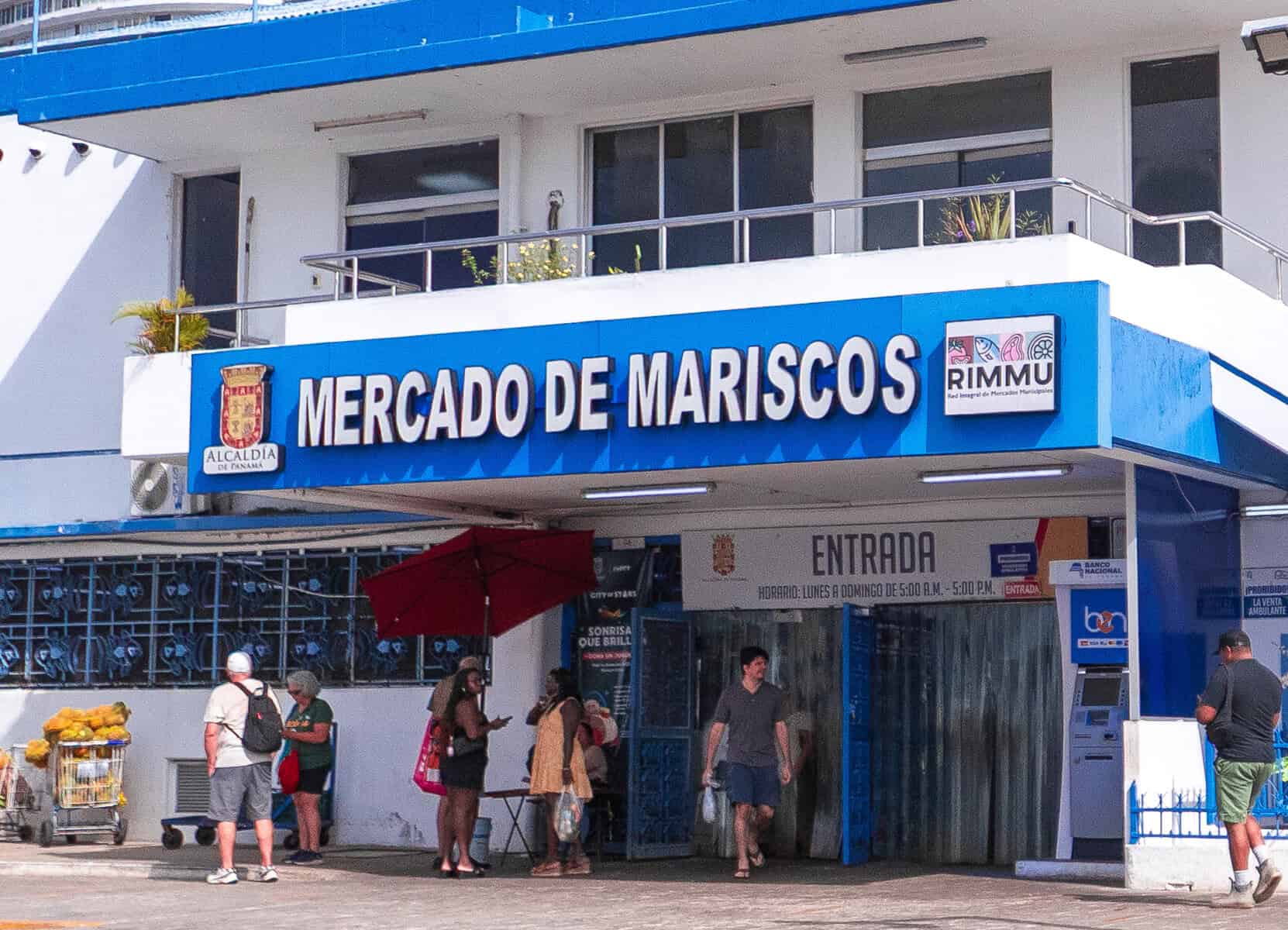
Casco Viejo, also known as San Felipe, begins with a threshold. You feel it when you arrive. The streets tighten. The skyline softens. The ocean appears at your side. Before you see rooftops or churches, you pass a place that still runs on routine. The Casco Viejo Fish Market sits right there, at the entrance, doing what it has always done.
The market is called the Mercado de Mariscos. Visitors often treat it like a quick stop. Locals treat it like infrastructure. Hotels and restaurants treat it like a supply. That mix is what makes it important. It is not staged, and it is not curated. It is a working market, with daily negotiations, real pricing, and a steady pulse.
This matters if you want to understand Panama City. The city has modernized rapidly. The skyline rose fast. The restaurant scene expanded. Tourism found its footing. Yet some places remain essential because they never stopped serving a purpose. The fish market is one of them. It is still where Panama begins its day.
Panama City in 2008: Why This Market Was the Center
When we first came to Panama in 2008, it felt like a different era. We were arriving from the United States, already used to constant options and constant motion. Panama City was not yet the city people picture today. The airport was smaller, There was no metro, Transportation worked differently. The city had fewer high rises, fewer distractions, and fewer places competing for your attention.
Dining out was not the default. Families ate at home more often. People spoke about food with pride and familiarity. You heard the same ingredients mentioned repeatedly. Fresh fish caught off Panama’s coastal waters was part of the identity. Corvina, especially, came up in conversation constantly. For a while, I thought corvina might be the only fish anyone ate.
That context is why the Casco Viejo Fish Market matters. It was not a novelty in 2008. It was a focal point. It was where households sourced dinner. It was where the city’s rhythm showed itself. The market anchors daily life, and it still does. Panama changed around it, but the function remained.
The Entrance to Casco Viejo Used to Be Simple
When we first arrived, the route into Casco Viejo was clear. You passed the fish market, then drove through Chinatown, then entered Casco Viejo. Trade, culture, and daily life were layered together in a way you could see from the car window. It felt practical, not romantic. It told you what mattered. People bought food. People sold food. People moved through the city with purpose.
Today, the city around it has changed, and Casco Viejo has evolved. More visitors arrive each year. More hotels operate inside San Felipe. The dining scene is far broader. Yet the fish market remains in place. It is still the physical and symbolic entrance to Casco Viejo. It still signals that this neighborhood is lived in, not staged.
That is why I call it a threshold. It’s a reminder that behind the boutique experience is a working city. Behind the Instagram photos is a daily supply. Behind the rooftop dinners is the morning’s catch. If you want the story of Casco Viejo, the fish market is part of the opening chapter.
Come Early to See the Casco Viejo Fish Market at Work
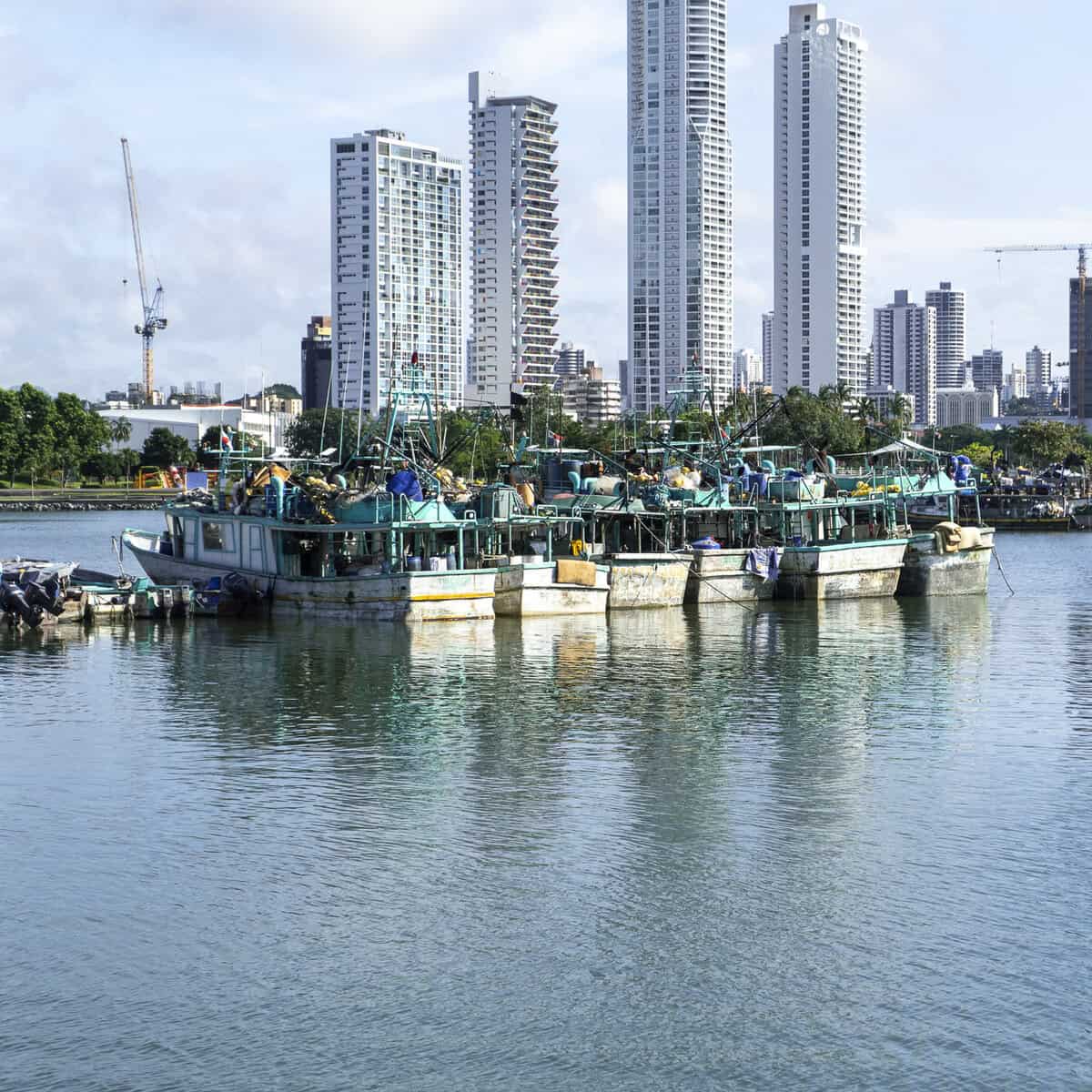
If you want to understand the Casco Viejo Fish Market, come early. In the morning, fishing boats arrive at the docks and unload their catch. Fish moves quickly from the sea to the stall. Negotiations happen out loud. Prices change by the hour. Buyers make decisions fast. This is not a performance. This is commerce.
Most of the most intense activity winds down by 9:00 or 10:00 a.m. That is when you begin to see a different crowd. Service staff arrive to collect food for households. Local buyers take over. The market becomes less frantic. By midday, it can feel calmer, but the work has already been done. The city’s seafood has already started moving outward.
The early visit is worth it even if you buy nothing. You get a clear view of what is real. You see how food distribution actually works. You see what hotels and restaurants rely on. You see how quickly fresh product changes hands. It’s one of the few places left where you can watch a modern city feed itself.
My Walk Down to the Casco Viejo Fish Market Today: What I Went to Buy
Today I walked down with my camera. From my home in Casco Viejo, it is about ten minutes. That is one of the privileges of living here. These places become part of your normal routine. You can step into something iconic without planning a day around it.
The sounds hit first. You hear voices calling out prices and quality. You hear the rhythm of bargaining. You hear the language of routine. I’m familiar with fish markets because I grew up in a coastal town in England. You learn what you’re looking at. You learn what fresh feels like. You learn what should make you pause.
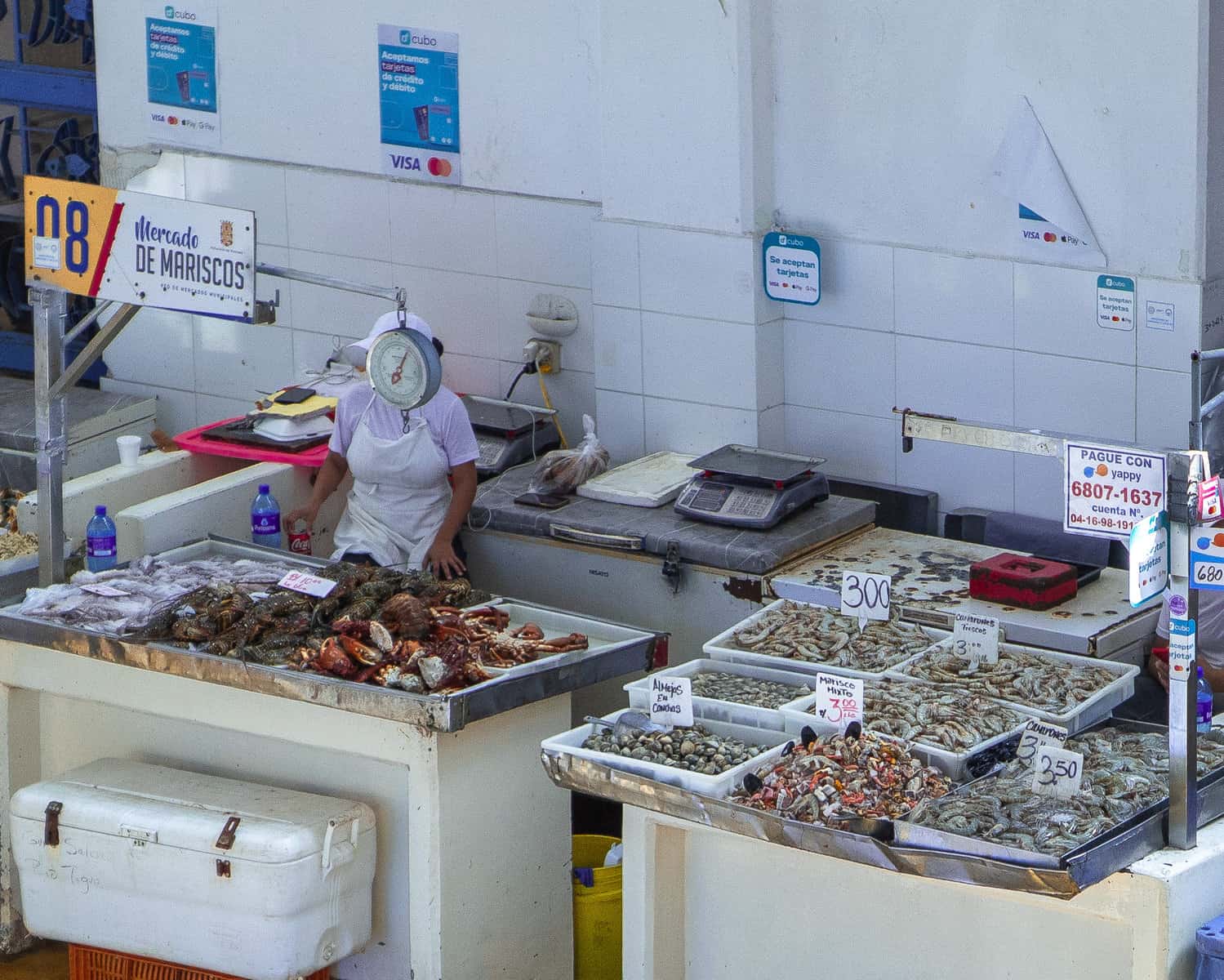
My mission today was simple. I wanted one pound of shrimp and one pound of fresh tuna. The shrimp was easy to find. The tuna did not pass my test today. Good tuna should have the color and firmness of a filet mignon. It should look clean and alive. Today, I didn’t see that standard. So I passed. That is part of buying from a real market. If it’s not right, you leave it. You come back. The market will still be there tomorrow.
Inside the Market: Better Than It Looks Outside
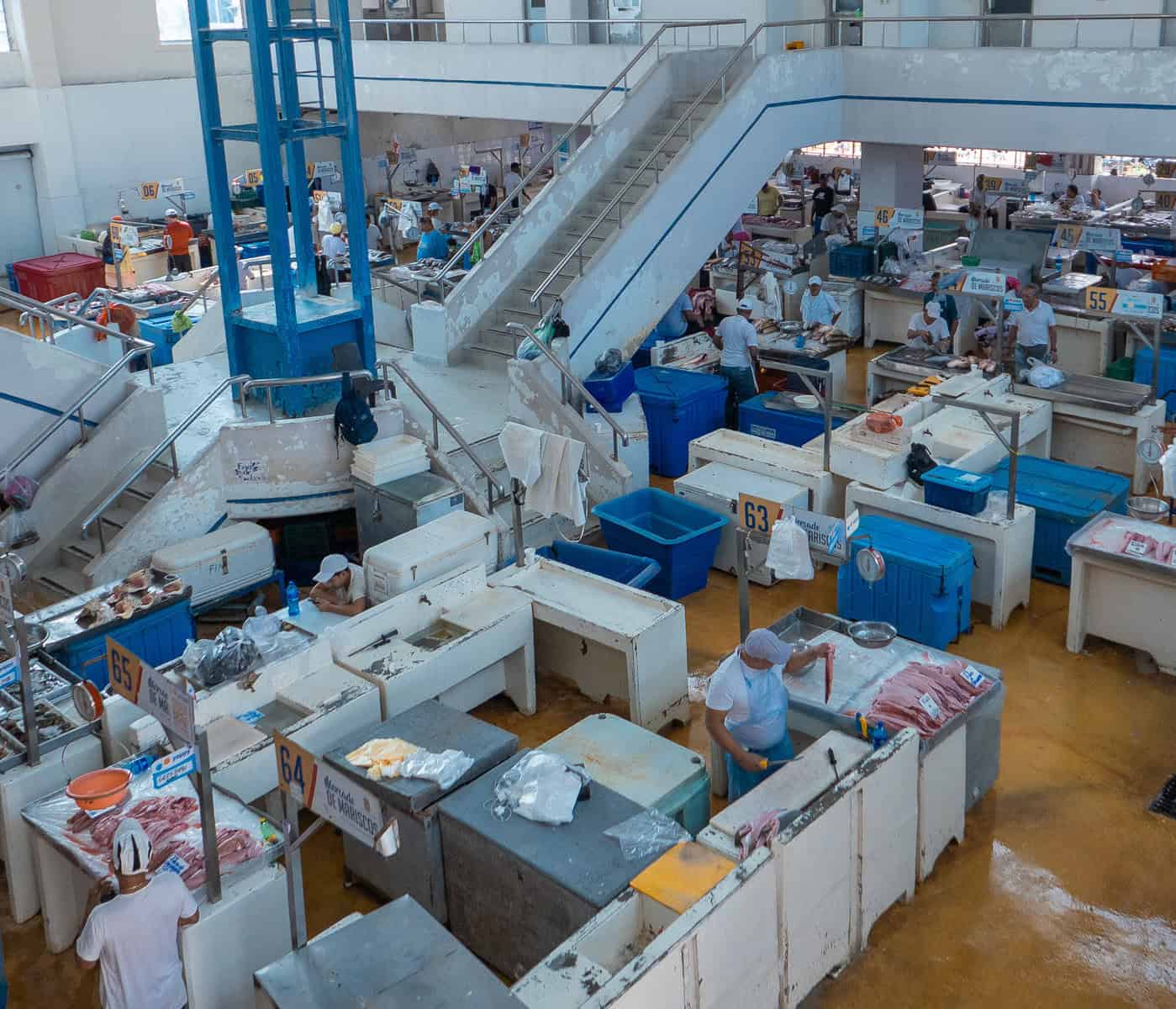
From the outside, the fish market can look rough. That surprises some visitors. They expect a polished attraction because Casco Viejo nearby is so photogenic. The reality is different. The building serves a purpose. It is built to handle volume, ice, water, and movement. It is not built to flatter.
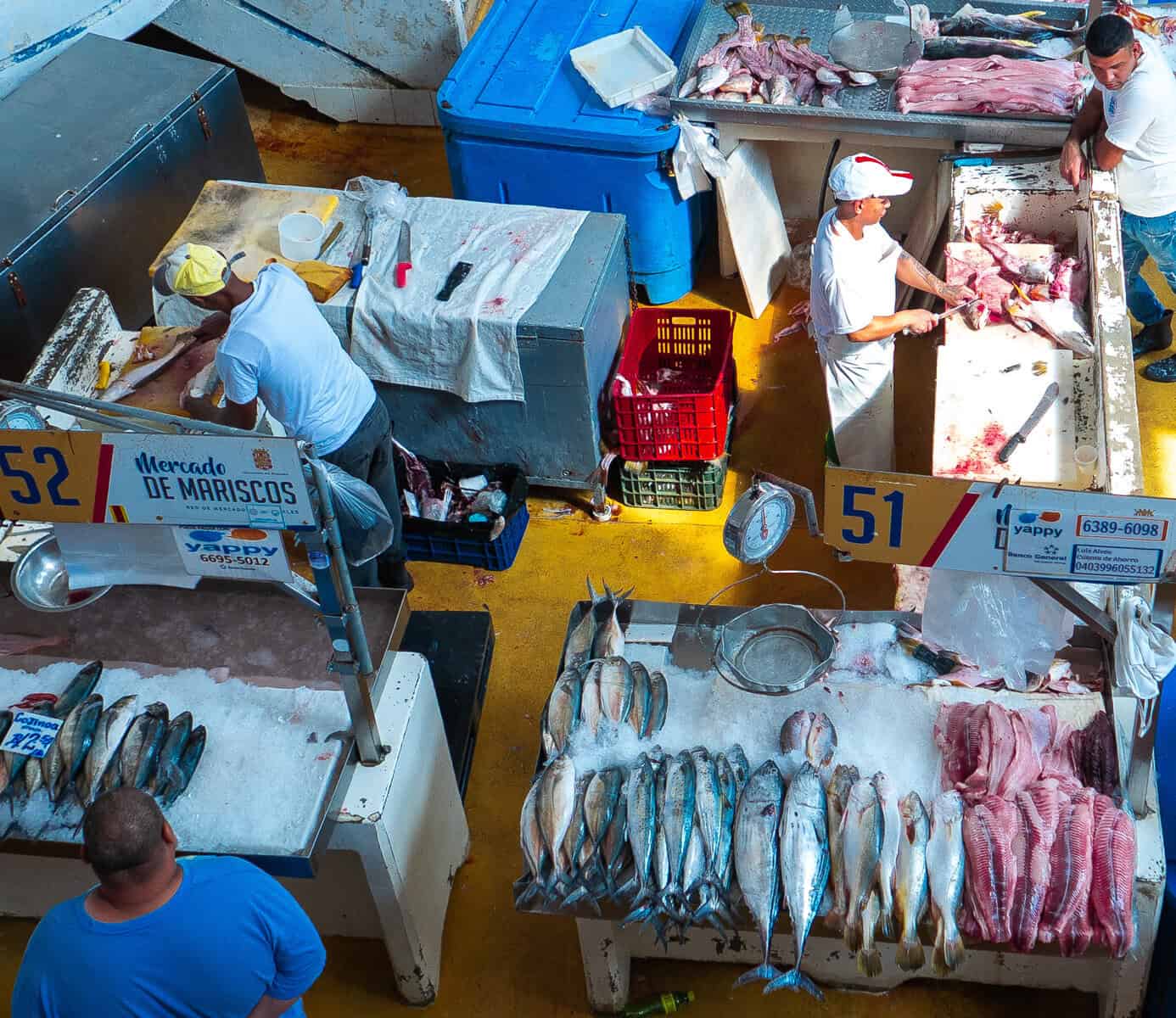
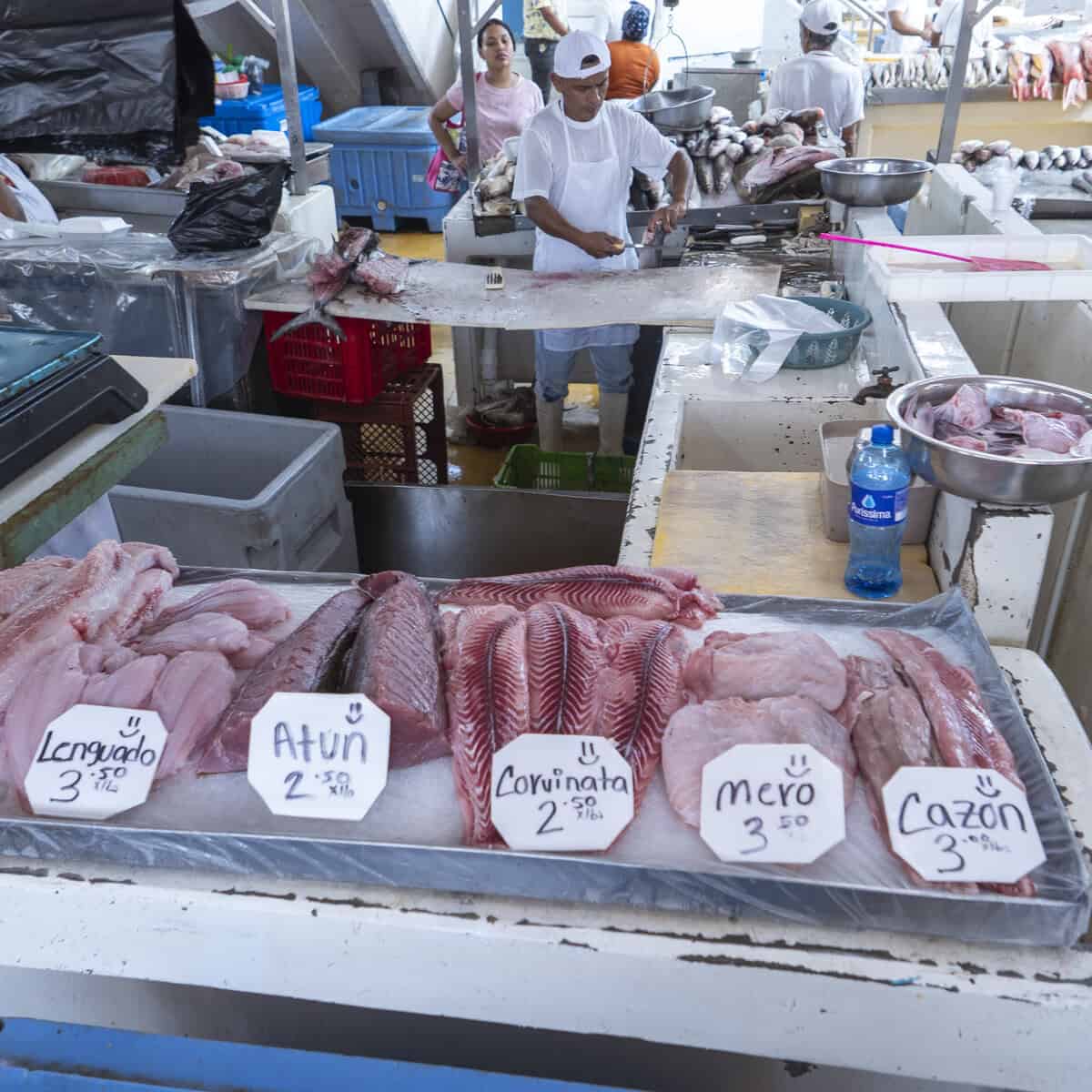
Once you step inside, it opens up. It feels more expansive than you expect. You see stall numbers. You see the product on ice. You see scales and knives and constant motion. You also see friendliness. People are used to visitors. They can tell who is buying seriously. They can tell who is just looking. They are usually patient with both.
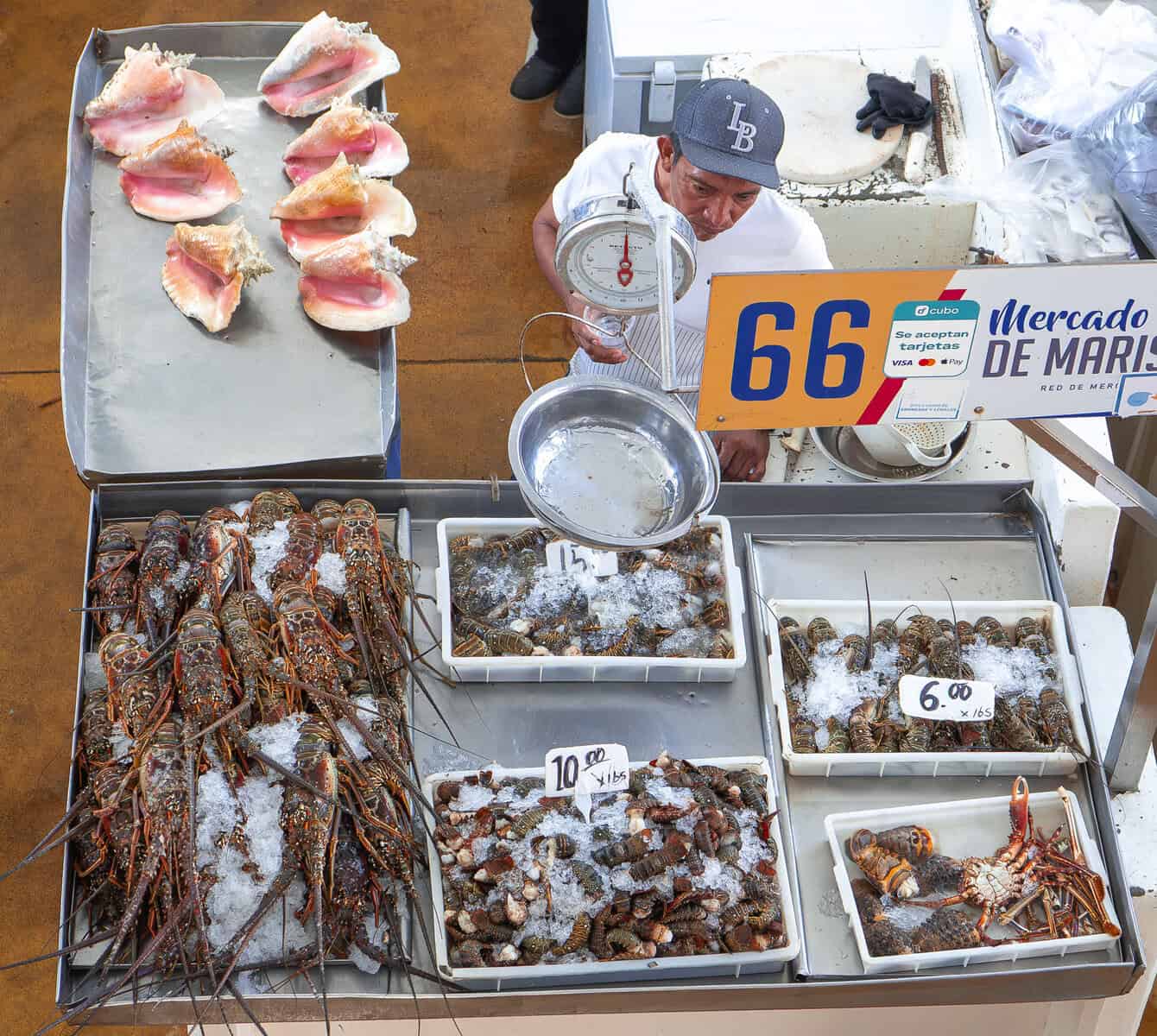
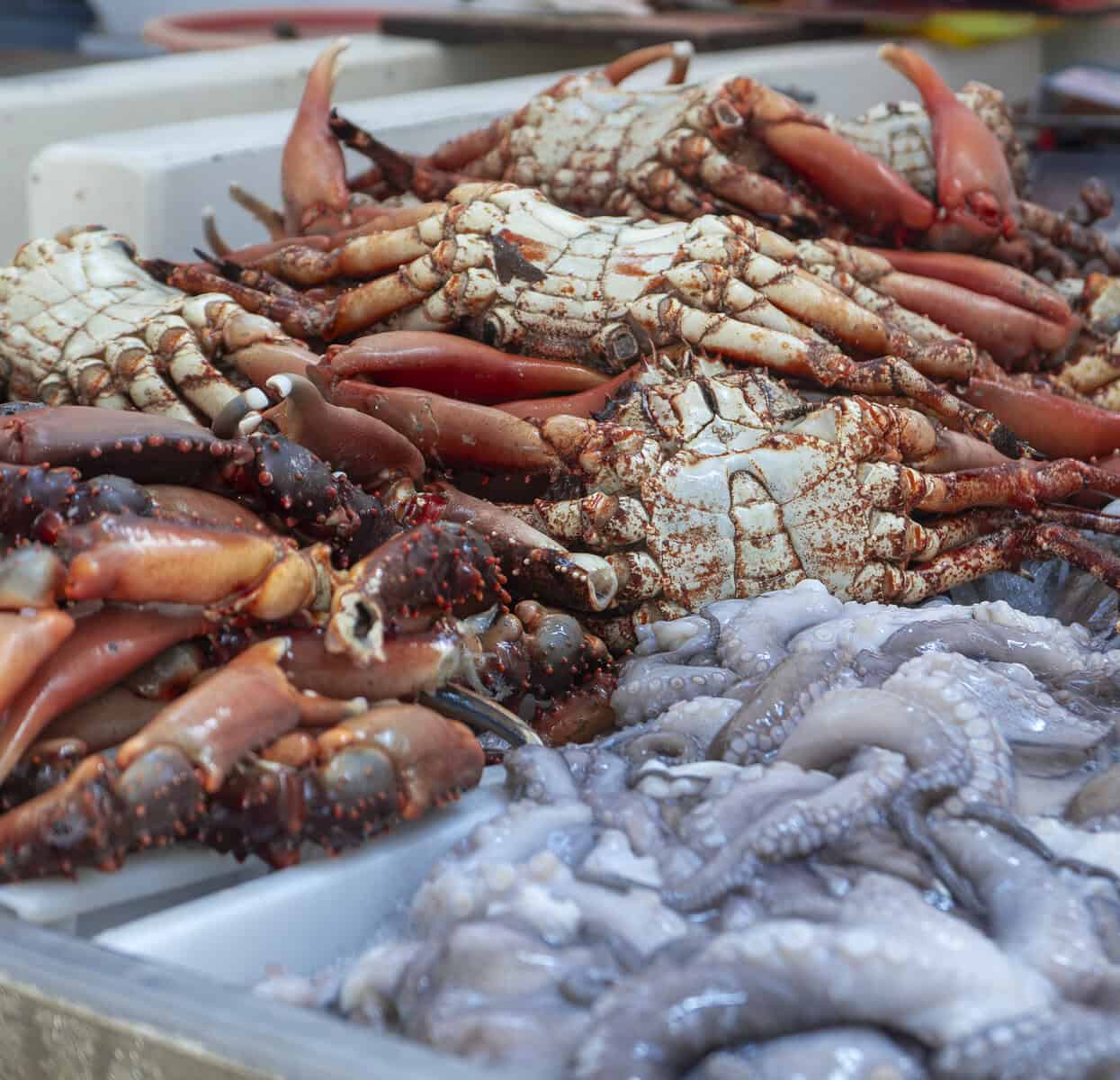
This is also where you start to notice variety. Visitors often think Panama seafood begins and ends with corvina. The market tells a broader story. You see shrimp, crab, lobster, tuna, snapper, and more. You also see familiar price signs, written by hand. That detail alone feels grounding. It is not curated typography. It is a working board that will be rewritten tomorrow.
The Mezzanine Restaurant: The Casco Viejo Fish Market on a Plate
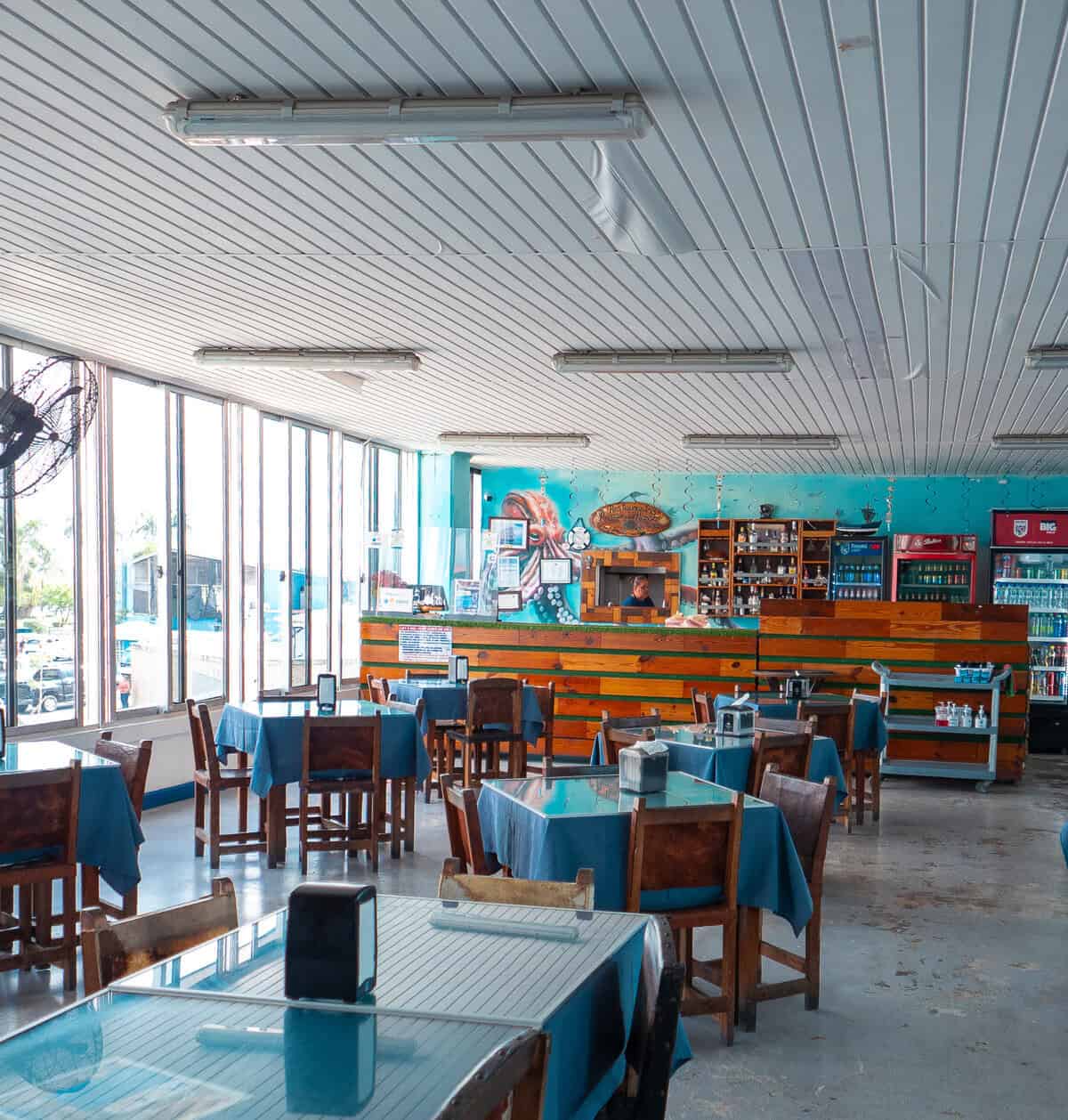
Upstairs, the market has a seafood restaurant on the mezzanine level. This matters because it creates a simple loop for visitors. You can see the product downstairs, then eat nearby without leaving the building. It is one of the most direct “sea to table” experiences in Panama City, but it is not marketed that way. It just exists.
If you want a straightforward seafood lunch, it works. If you want to watch the market and then decompress, it works. It is not fine dining. It is not trying to be. It is an extension of the market itself. That is why it feels honest.
For some travelers, this is the easiest way to participate without needing to negotiate purchases. You get the experience, the atmosphere, and the food, without the friction of buying raw product. That is a fair choice, especially for short-stay visitors.
The Outdoor Courtyard: Evening Energy and Competition
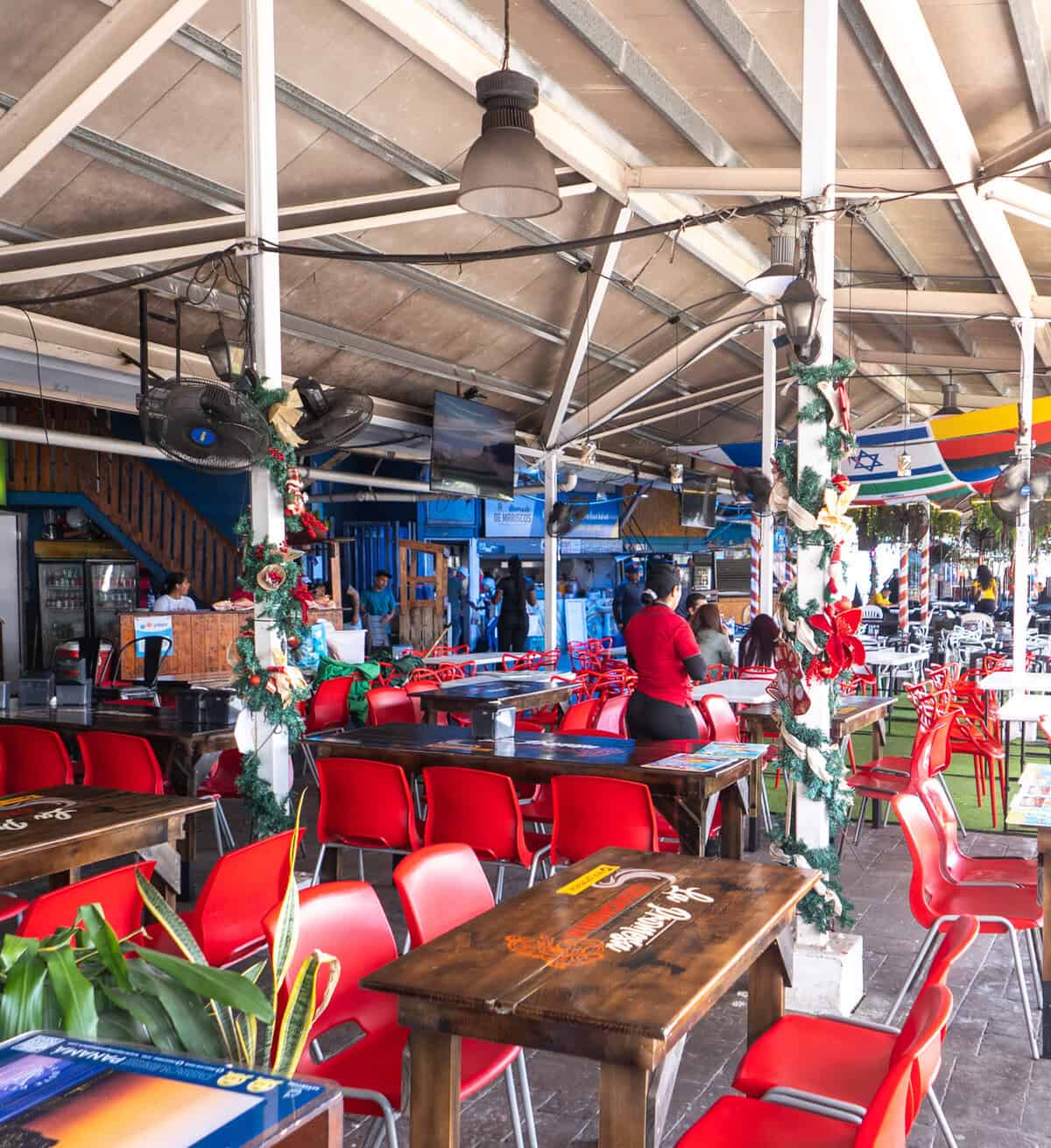
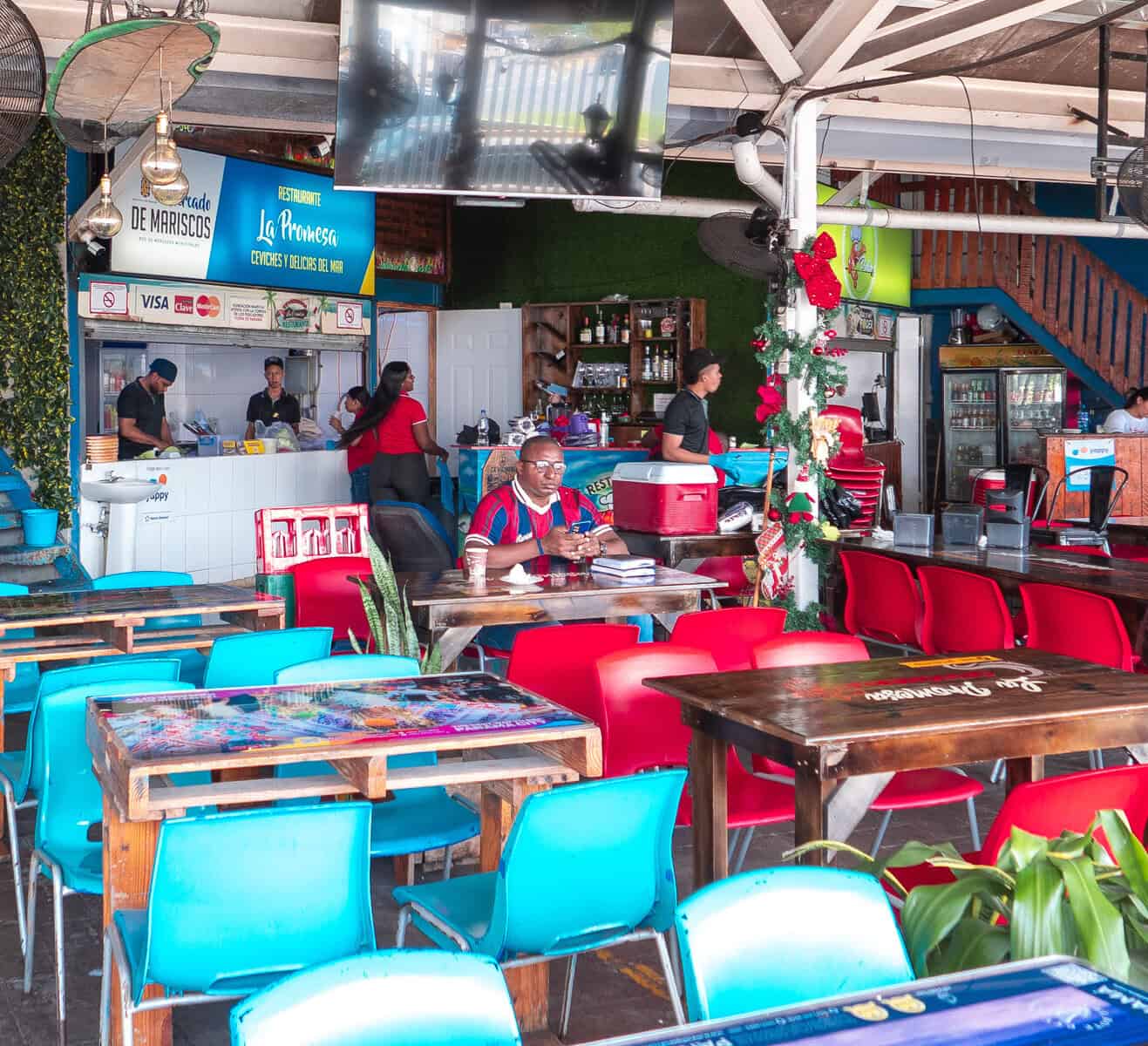
If you prefer outdoor dining, the courtyard on the water side is the other story. There are many vendors outside, and the energy shifts at night. In the evening, it gets busy. Competition between stalls is obvious. Every stand is selling fish because that is the identity of the place. It’s like a food court, but stripped down and local.
Families like it because there is space. Kids can move. Tables are close together, which creates conversation. You often end up sitting beside Panamanian families who are there for the same reason you are. They want something fresh, simple, and familiar.
This is where the market becomes part tourist, part local ritual. Visitors arrive to taste the experience. Locals arrive because it is easy and dependable. That mix is part of the charm. It does not feel curated. It feels like a real public space.
Prices and Familiarity: Why Visitors Relax at the Casco Viejo Fish Market
One of the reasons the Casco Viejo Fish Market works for visitors is familiarity. In some countries, fish markets can be intimidating because the products feel unfamiliar. Southeast Asia is a good example. The variety can be incredible, but also confronting. Here, most Western visitors recognize what they are seeing.
Shrimp looks like shrimp. Crab looks like crab. Lobster is lobster. Tuna is tuna. Corvina becomes a new word, but the fish itself feels approachable. That makes it easier for families. It makes it easier for cautious travelers. It makes it easier to engage without feeling overwhelmed.
Pricing also plays a role. A pound of shrimp can still cost around five dollars, depending on the day. Fish and crab often sit around four to five dollars per pound. Those numbers shift with supply, but the market remains accessible. It is not built for luxury buyers. It is built for the city.
How to Visit the Fish Market from Casco Viejo
If you are staying in Casco Viejo, the fish market is easy to reach on foot. It sits at the entrance to Casco Viejo, near the start of the Cinta Costera. If you walking along the waterfront, it is an obvious stop. If you are coming from downtown Panama City, it can be a first stop before you enter Casco.
I always suggest pairing the visit with something else nearby. You can visit in the morning, then continue into Casco for coffee, museums, or a walk through the plazas. Or you can walk the Cinta Costera, stop at the market, and then head into Casco Viejo for lunch. It works either
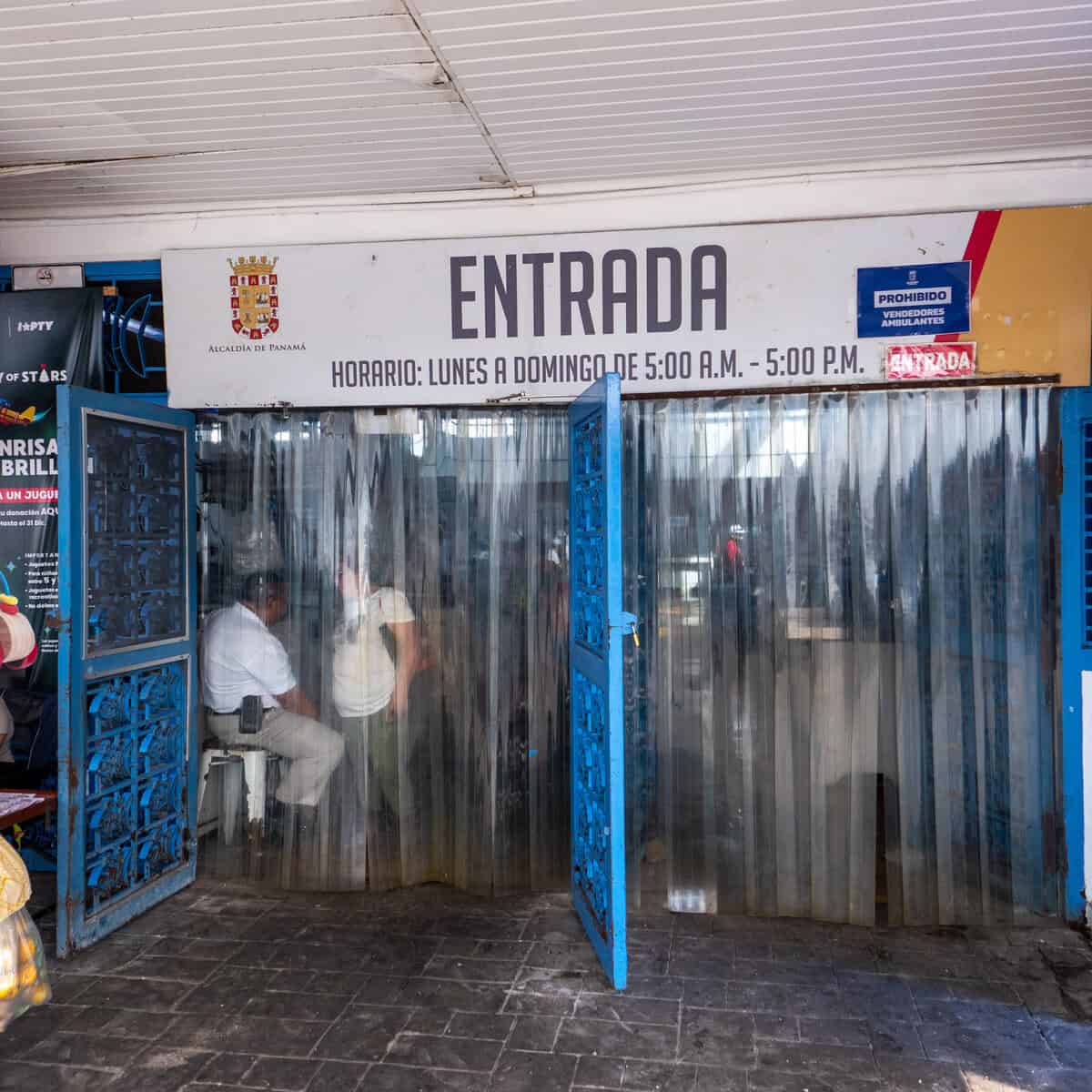
One note that matters: the market is closed on Mondays. Plan around that. If you arrive on a Monday expecting it to be open, you will be disappointed. On any other day, early morning delivers the most authentic view.
What This Place Tells You About Panama City
The fish market is not just a place to eat. It shows how the city functions behind the scenes. It shows that tourism is layered on top of a working culture. It shows that Casco Viejo is not a stage set. It is attached to real distribution, real labor, and real daily life.
In the morning, all roads still lead here. Hotels and restaurants depend on it. Households depend on it. Service staff depend on it. Tourists benefit from it, but it is not built for them. That is why it feels authentic. It exists whether you visit or not.
This is the difference between something iconic and something staged. Iconic places continue because they are useful. They do not need branding to justify their existence. The Casco Viejo Fish Market is one of those places.
Fast Facts: Casco Viejo Fish Market
- Official name: Mercado de Mariscos
- Location: Entrance to Casco Viejo (San Felipe), Panama City
- Best time to visit: Early morning (5:00–9:00 a.m.)
- Peak commercial activity ends: Around 9:00–10:00 a.m.
- Closed: Open everyday
- Seafood available: Shrimp, corvina, tuna, crab, lobster, snapper
- Dining options: Indoor mezzanine restaurant + outdoor waterfront stalls
- Family-friendly: Yes
- Type: Fully working commercial fish market
- Local use: Hotels, restaurants, households, service staff
Questions and Answers: Casco Viejo Fish Market
Yes, it is generally safe, especially during daytime hours. Use normal city awareness.
Early morning is best for seeing boats, unloading, and real market activity.
Yes, and it is a great learning experience for kids. It is memorable and visual.
Yes, many businesses source seafood here. It is part of the supply chain.
No, locals use it daily. Tourists are simply one part of the crowd.
Yes, However Sunday is a sleeper day not a lot going on. Plan your visit on another day.
Final Thoughts: Why I Still Go Back to the casco fish market
I’m lucky to live in Casco Viejo because places like this remain within walking distance. You can forget how rare that is until you travel. Most historic districts polish away the working parts. They keep the facades and remove the infrastructure. Casco Viejo is not perfect, but it is still lived in. The fish market proves it.
When you walk through the market, you feel present. You are not scrolling. You are not consuming a curated experience. You are watching the city feed itself. That feeling takes me back to childhood in England. The day mattered more than the schedule. You focused on what was in front of you. The fish market brings that back, and it is why it still matters.
The Fish Market isn’t about polish. It’s about rhythm. Morning deliveries. Conversations shouted over crushed ice. Lobster tails, shrimp, snapper — all handled with purpose. This is Casco Viejo before it wakes up for the day, and if you slow down, it rewards you with real texture and real stories.
- Start with our most-read Casco Viejo stories — the pieces travelers come back to again and again
- Plan your time properly with the Casco Viejo Visitor Guide — designed to help you pace your visit, not rush it
- Want the bigger picture? Read What Visitors Get Wrong About Casco Viejo — it explains exactly why places like the Fish Market matter
- Or return to the CascoViejo360 homepage and keep exploring
🧭 Out and about with James.
Explore Casco Viejo
On Your Own Time
This self guided walking tour is designed to last up to four hours, but you set the pace. Do it in one relaxed half day, or break it into a few stops between coffee, meals, and photos.
- No groups, no schedules
- Start anywhere, stop anywhere
- Works on phone or desktop
Where to Eat in Casco Viejo
From market-fresh seafood to chef-driven kitchens, explore Casco Viejo restaurants worth planning your day around.
Explore RestaurantsLocal Art & Creative Spaces
Step inside Casco’s contemporary art scene and meet the artists shaping the neighborhood today.
Visit Galería SolarArts & Gifts in Casco Viejo
Discover meaningful souvenirs, local craftsmanship, and galleries that reflect Panama’s creative soul.
Browse Arts & Gifts