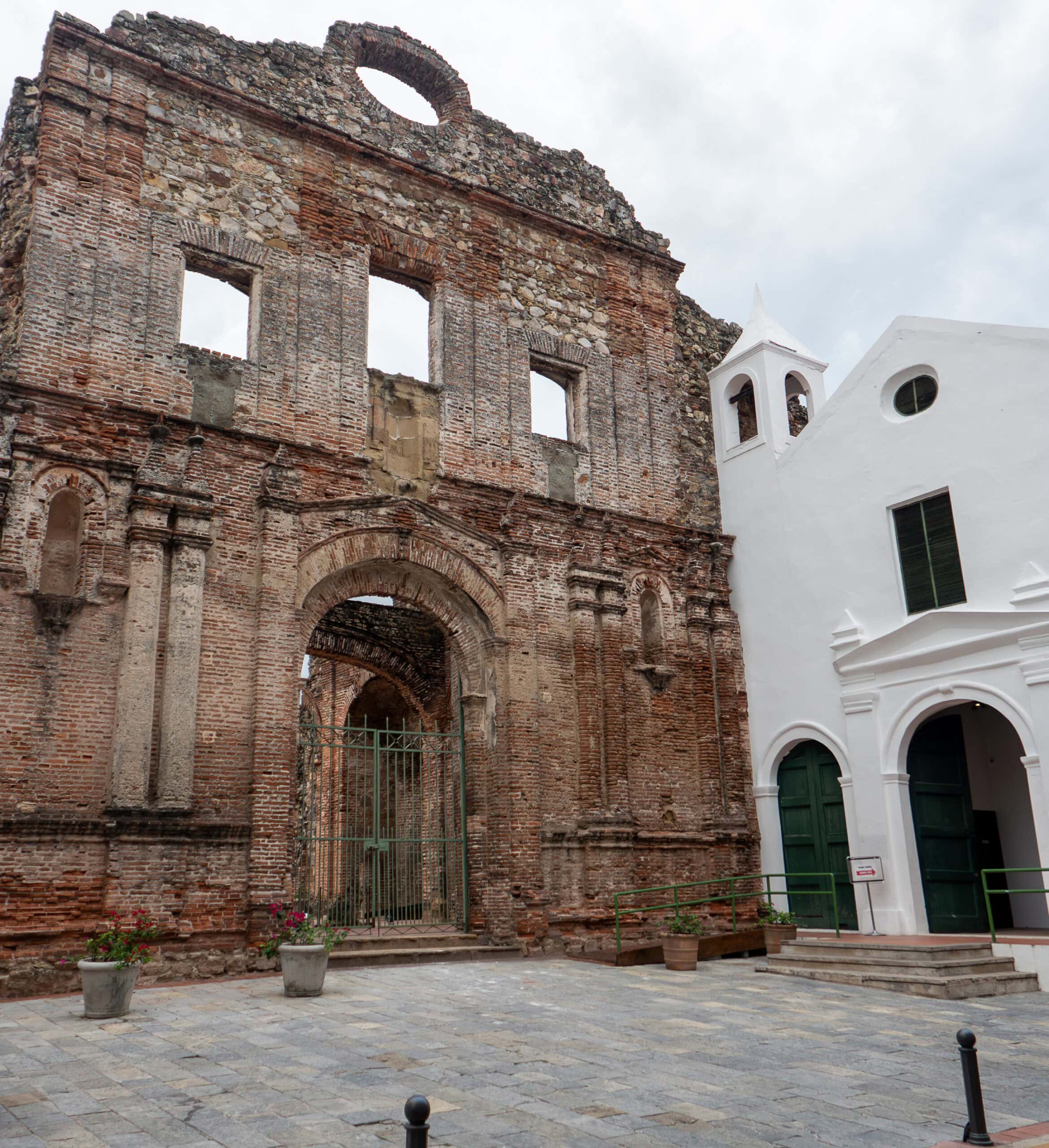
The Flat Arch of Casco
standing as a testament to architectural ambition and Panama’s global destiny
If you’ve wandered Casco Viejo’s (also known as San Felipe) historic streets, chances are you’ve passed this weathered brick arch without realizing its monumental role in Panama’s history. Known as “El Arco Chato,” (Flat Arch Casco Viejo) this humble relic held up more than a crumbling wall it held up Panama’s promise to the world. Let’s walk through the past, and into the story of how this silent structure helped define the future of a nation.
A Symbol of Colonial Ambition
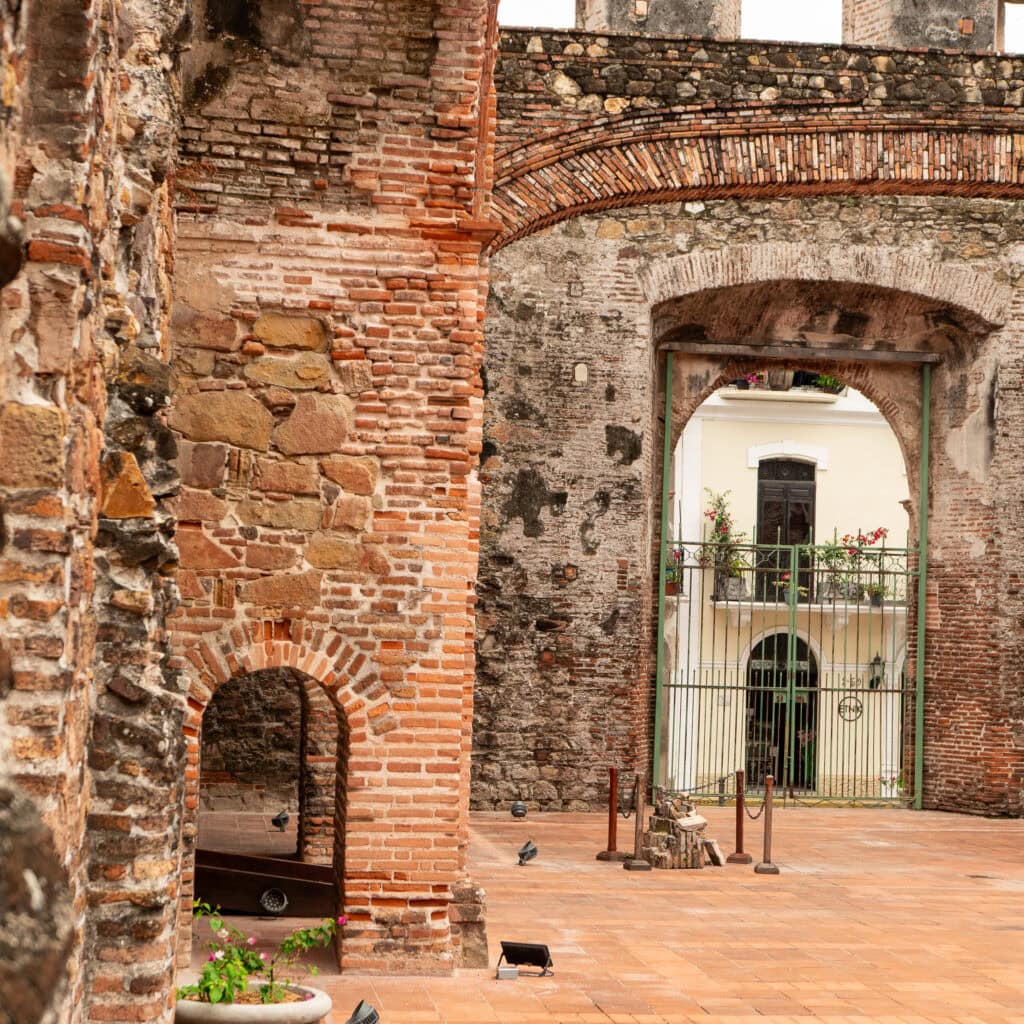
In the 1670s, Spanish Jesuits constructed the Flat Arch Casco Viejo as part of their grand church and convent. It was an engineering feat: its near-flat profile defied architectural norms of the day. Over the centuries, fires and abandonment brought the surrounding structures down but the Flat Arch Casco Viejo remained.

The Arch That Sold a Canal
When the United States was considering Panama as the site for the Interoceanic Canal, they had one overwhelming concern: earthquakes. Panama’s seismic stability was in question… until U.S. engineers pointed to one stunning example the Flat Arch Casco Viejo.
Unreinforced, centuries old, and still standing strong. It became the unofficial proof that Panama was geologically sound and soon after, the canal dream began to materialize.
Flat Arch Casco Viejo, Why This Story Matters to Me
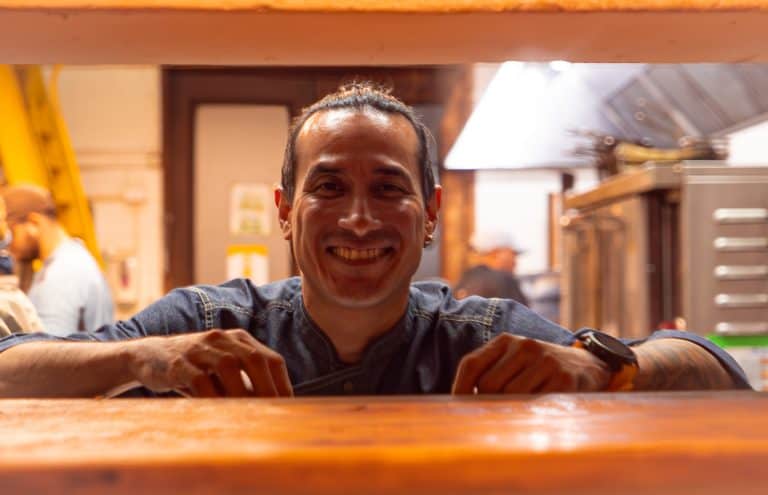
I’ve walked past the Flat Arch more times than I can count. Sometimes I’m rushing to a meeting, other days I’m wandering with a coffee, and every now and then I stop and simply admire how it still stands unreinforced, defiant, and full of character. It’s one of those places that reveals Panama’s soul if you give it a moment.
After four decades in the hotel and meetings industry from the Ritz-Carlton to the Panama Convention Center I’ve learned that great destinations aren’t built from shiny brochures. They’re built from stories like this: earned, weathered, and still here.
The Flat Arch isn’t just part of Casco Viejo’s history. It’s part of mine, too. And sharing these pieces of Panama is why I built CascoViejo360.com in the first place: to help visitors understand why these stones matter.
Panama’s Most Photographed Arch
Today, visitors often pose beneath it, unaware of the silent story behind the stones. It’s become one of the most photographed architectural elements in Casco Viejo — not just for its beauty, but for the story it tells without words. The significance of the Flat Arch in Casco Viejo continues to resonate.
Visit in the early morning to capture perfect light without crowds.
Then head to a Coffee Café
A Focal Point for the Future
The Flat Arch Casco Viejo isn’t just a photo op. It’s a call to remember the weight of heritage to recognize that the choices of past architects and visionaries are still shaping Panama today. It stands not just for what was built, but for what was believed in.
El Arco Chato remains one of Casco Viejo’s most treasured landmarks not because of its grandeur, but because of its grit. It’s a piece of stonework that shifted world trade and opened the doorway for a nation’s rise.
When in Casco, don’t just walk by stand still. Look up. And listen. The Flat Arch isn’t just an architectural quirk; it’s a statement of defiance. For centuries, it survived fires, floods, and time itself proof that balance doesn’t always come from perfection, but from purpose. Every angle tells a story about resilience and adaptation, about how this city learned to rebuild without losing its soul.
Architecture here is more than beauty it’s endurance. Each stone and column represents the craftsmanship that shaped a nation’s identity. And if you want to understand how design mirrors history, learn about Casco’s civic architecture at the Municipal Palace. Together, these landmarks tell one story of vision, restoration, and pride that refuses to fade.
Fast Facts About the Flat Arch (El Arco Chato)
- Built: 1670s by Spanish Jesuits
- Materials: Local brick, stone, and lime mortar
- Engineering Feat: Near-flat structural span without reinforcement
- Historical Impact: Helped validate Panama as the chosen route for the Interoceanic Canal
- Survived: Fires, earthquakes, abandonment, and multiple reconstructions around it
- Nickname: “El Arco Chato” (The Flat Arch)
- Location: Inside Iglesia de la Compañía de Jesús
- Best Photo Time: 6:30–8:00 AM
Q&A
A: Because it proved Panama was geologically stable enough for the Canal a turning point that changed global trade forever.
A: Yes. The surviving arch dates back to the 1600s and still stands without reinforcement.
A: Remarkably flat for its period its engineering defied 17th-century norms and astonished U.S. Canal engineers centuries later.
A: Inside the ruins of the old Jesuit church on Avenida A minutes from the Presidential Palace.
A: No. The site is publicly accessible and free to visit.
A: Early morning soft light, fewer people, and a calmer feel.
Closing Thoughts
The Flat Arch doesn’t pretend to be perfect. Its beauty lies in the fact that it shouldn’t be standing… yet it is.
In a neighborhood known for its reinvention, this arch remains a quiet reminder that Panama has always punched above its weight. It’s proof that brilliance sometimes comes wrapped in weathered brick and uneven stone and that ambition isn’t always loud.
If you’re in Casco, pause here for a moment. You’re standing at the place where a nation began to believe in its future.
- Return to the homepage for more on Casco’s past and present
- Discover more in Sightseeing in Casco — plazas, churches, legends and all
- Visiting soon? Browse Hotels in Casco Viejo with old-world charm and modern comfort
🧭 Out and about with James.
Museum of the Mola
A vibrant museum dedicated to Guna culture, where the meaning behind each stitch tells a story of identity and heritage.
Visit MuseumArts & Culture
From street murals to studio exhibits, Casco’s art scene is alive with talent and passion rooted in history and place.
Explore ArtsEvents in Casco
Stay in the loop with local events—gallery openings, live music, artisan fairs, and street festivals that bring Casco to life.
View Events