The Plazas of Casco Viejo: The Public Rooms of Panama’s Old City
The plazas of Casco Viejo (also known as San Felipe) tell the neighborhood’s story through the spaces between its buildings. For generations, they have served as its public rooms. History happened here, but so did ordinary life. People gathered, rested, argued, celebrated, worshipped, ate, and watched the city change around them. Each plaza developed its own character, shaped by the buildings, monuments and people surrounding it. Today, they are among the most photographed places in Panama City. Yet their beauty alone does not explain why they matter.
When we first visited Casco Viejo in 2008, these plazas felt very different. We were staying at the Bristol Hotel while searching for a retirement home in Panama. The staff became concerned when we mentioned visiting Casco Viejo. They even offered to arrange security for us. Quantum of Solace was being filmed here, and we assumed the production brought sufficient security. So, with curiosity overcoming caution, we went to see the neighborhood ourselves.
What we found was beautiful, neglected, and often unsettling. Many buildings were deteriorating, and police officers stood on numerous corners. During the day, government employees brought some movement to the streets. At night, Casco became remarkably quiet. Poor lighting cast long shadows across monuments, balconies, and empty plazas. Those same spaces now welcome residents, visitors, restaurants, weddings, performances and national celebrations. Their transformation reflects the larger story of Casco Viejo, which I have watched unfold for nearly two decades.
The Plazas of Casco Viejo We First Knew
We were advised to remain near Avenida Central and Calle B, avoiding the smaller cross streets whenever possible. That advice shaped how we first understood the neighborhood. Movement felt deliberate rather than casual. You chose a destination, followed the safest route, and remained aware of everything around you. Casco was not yet somewhere visitors wandered without a plan. Government offices kept parts of the neighborhood active during working hours. Once those employees left, the streets quickly emptied.
Plaza Bolívar offered one of the few reasons to return after dark. A small cluster of restaurants gave it warmth, company and a sense of security. We travelled there directly by taxi from the Bristol, then returned the same way. Plaza de la Independencia felt far less animated, even around the Cathedral. Plaza Herrera was another matter entirely. It was not somewhere we considered visiting for pleasure. The welcoming terraces and evening activity people know today had not yet arrived.
Even after our apartment was restored, evening life remained limited. The plazas were present, but they had not reclaimed their social purpose. There were few reasons to linger, and darkness changed the character of familiar buildings. Decorative ironwork, statues, trees, and balconies became silhouettes against poorly lit streets. Today, those features create atmosphere. Back then, they often created uncertainty. That memory matters because the transformation was not only architectural. Casco Viejo had to become a place where people felt comfortable gathering again.
How the Plazas of Casco Viejo Changed
Casco Viejo’s recovery is often described with one convenient word: gentrification. However, that word alone cannot explain what happened here. Many grand buildings originally belonged to prominent Panamanian families, whose names remain attached to local streets and houses. As families moved elsewhere, numerous properties deteriorated or were abandoned. Informal occupants later found shelter inside buildings that owners had left behind. By 2008, decades of neglect were visible across much of the neighborhood.
The restoration involved many different people and circumstances. Some Panamanian families returned to properties connected with their own history. Other local owners invested in buildings that were approaching complete ruin. New residents also accepted the expensive responsibility of restoring protected structures. Every property carried a different legal, human, and architectural story. Questions surrounding displacement deserve honesty and sensitivity. However, Casco Viejo’s recovery cannot be reduced to one simple account of outsiders removing an established community.
Santa Ana and El Chorrillo remained important residential neighborhoods beyond the former walls of Casco Viejo. (also known as San Felipe) developed differently, with government buildings, churches, plazas, and former family residences shaping its identity. Much of its restoration involved making damaged buildings usable again while preserving their historical character. As those properties returned to life, restaurants, hotels, residents, and visitors followed. Better lighting and greater activity gradually changed how the streets felt. The plazas of Casco Viejo became gathering places again because the surrounding neighborhood also became active.
Plaza de la Independencia: Casco Viejo’s Ceremonial Heart
Plaza de la Independencia has always carried more formality than Casco Viejo’s other public spaces. It began as the Plaza Mayor after Panama City moved here in 1673. For centuries, it remained the principal square within the fortified city. Its present name recalls Panama’s separation from Colombia in 1903. However, many residents still refer to it simply as Cathedral
A Square Surrounded by History
The Metropolitan Cathedral commands one side of the square with its pale stone towers and broad central façade. The Panama Canal Museum, Municipal Palace and other historic buildings complete the formal setting. Together, they create one of Panama City’s most important architectural spaces. This is where religious, civic and national history stand within a few steps of each other.
From Quiet Square to Ceremonial Front Room
When we began spending time in Casco Viejo, the plaza often felt surprisingly empty. Even around 2010, it lacked the constant movement visitors see today. The Cathedral was there, and the buildings remained impressive, but the public life between them felt limited. You could cross the square without encountering the photographs, walking tours and busy terraces now associated with the area.
Today, Plaza de la Independencia feels like Casco Viejo’s ceremonial front room. National celebrations, cultural programs and important public gatherings regularly return activity to the square. Wedding parties gather beneath the Cathedral towers, while visitors photograph the surrounding façades. Families rest beneath the trees, and guides begin explaining Panama’s history to newly arrived groups.
Many walking tours begin at Plaza de la Independencia because the Cathedral provides an obvious landmark. My experience living in Casco Viejo suggests the opposite. Starting here reveals the grand finale before the neighborhood has properly introduced itself. That is why my self-guided walking tour completes its loop at Cathedral Plaza. By then, visitors have crossed Casco’s streets and passed its churches, homes, stores, restaurants, and coffee shops. The square’s grandeur becomes a conclusion rather than an introduction. From here, visitors can decide what they want to revisit, where they want to eat, or how their day should continue. The tour may finish here, but Casco Viejo remains open before them.


Plaza Bolívar: Casco Viejo’s Most Intimate Plaza
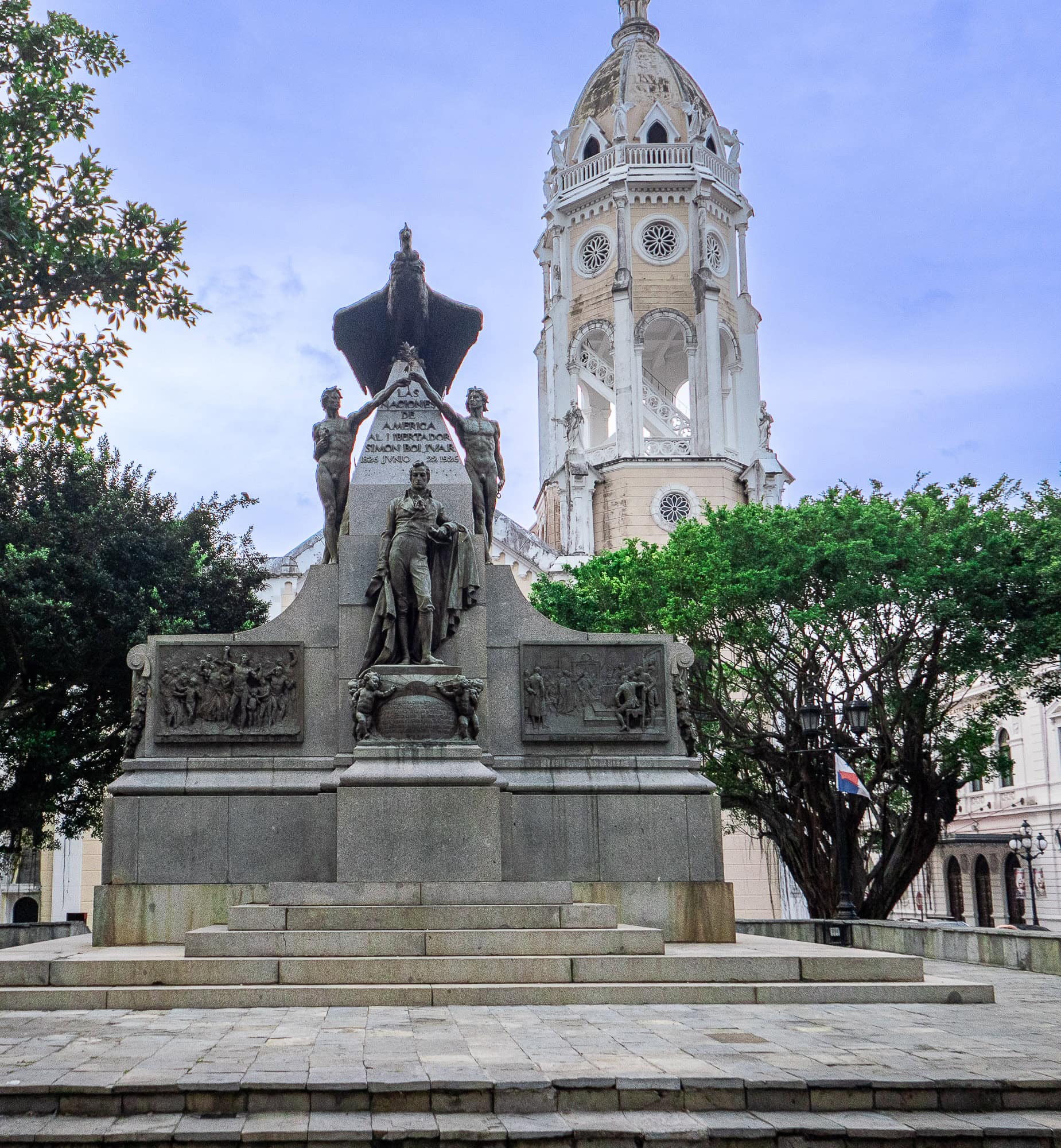
Plaza Bolívar has always felt more intimate than Plaza de la Independencia. It was originally known as Plaza de San Francisco, reflecting the church beside it. Its present name dates from 1926, marking the centenary of Simón Bolívar’s Congress of Panama. The monument at its center gives the plaza historical importance, but formality never overwhelms its human scale.
For us, Plaza Bolívar became the first place where Casco Viejo felt approachable after sunset. Its small group of restaurants created light, conversation and a reassuring sense of activity. Tables brought people into the square, while surrounding balconies made the space feel protected rather than exposed. During years when much of Casco became silent after dark, Plaza Bolívar offered a glimpse of what the neighborhood could become.
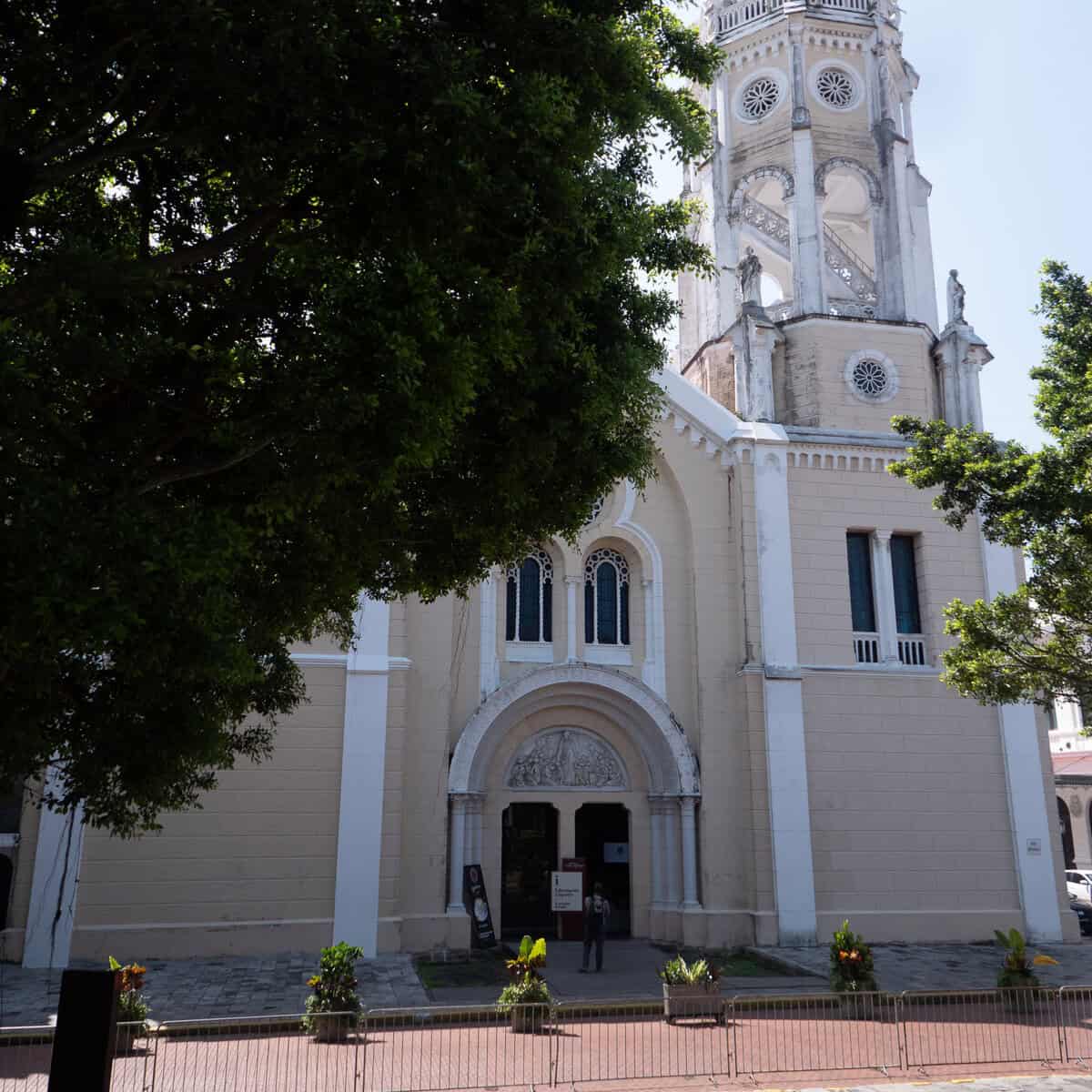
That atmosphere remains central to its character today. Restaurants still spill gently toward the plaza, especially as the afternoon heat begins to fade. The Church of San Francisco, Palacio Bolívar and National Theatre surround visitors with history, while the Church of San Felipe Neri stands just diagonally across from the square. Yet Plaza Bolívar never feels like an outdoor museum. People meet, share dinner and watch the evening develop around them. Of all the plazas in Casco Viejo, this may be the easiest place to sit without feeling hurried.
Plaza Herrera: Casco Viejo’s Most Dramatic Transformation
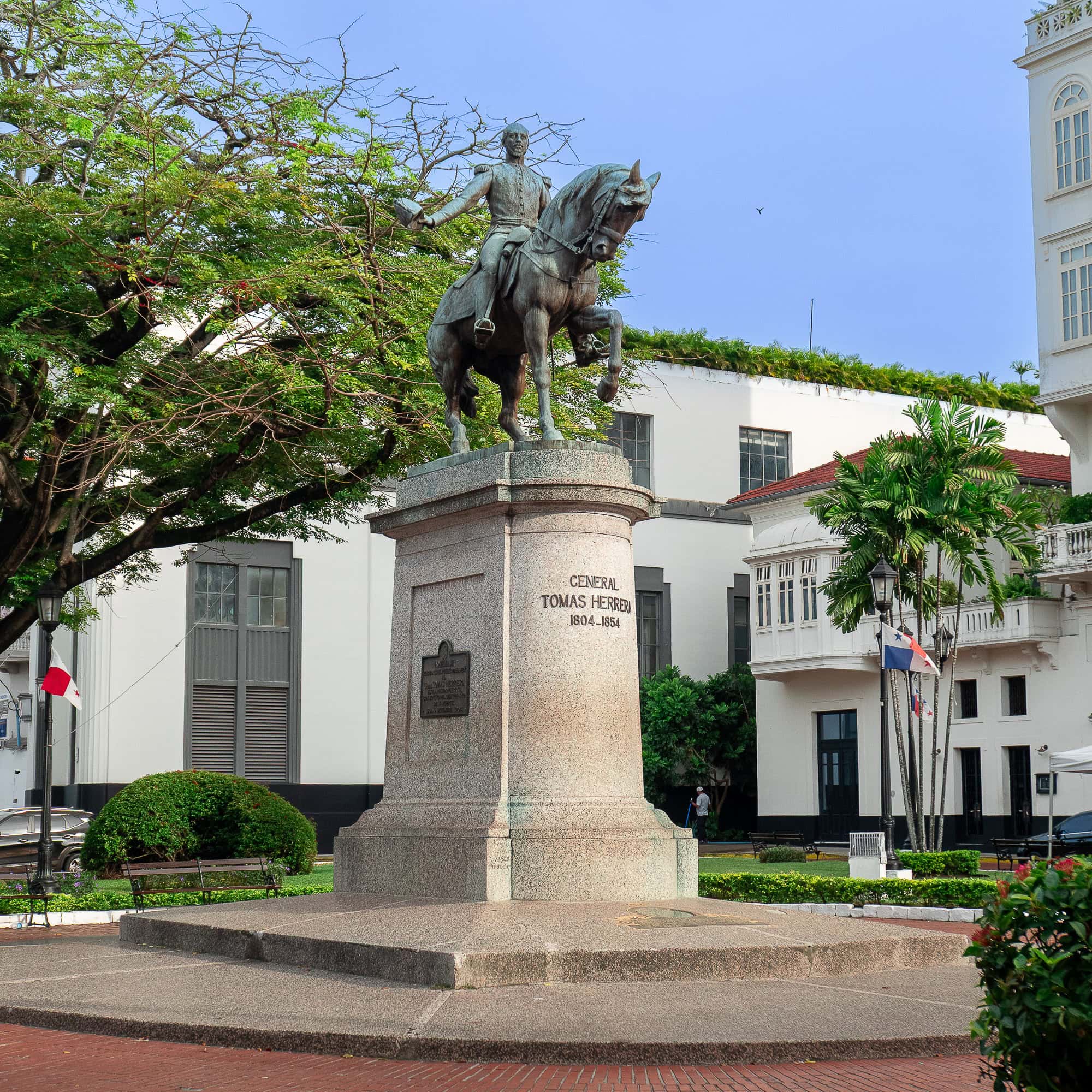
Plaza Herrera feels broader and more open than Casco Viejo’s other historic squares. It developed later than the original Plaza Mayor and occupies an important position near the neighborhood’s western side. The plaza honors General Tomás Herrera, whose equestrian statue stands prominently at its center. Yet its modern identity has been shaped as much by recent change as by historical memory.
The Plaza We Did Not Visit
In 2008, Plaza Herrera was not somewhere we considered visiting for pleasure. The surrounding area felt disconnected from the limited activity found elsewhere in Casco Viejo. Several buildings were badly deteriorated, and there was little reason for visitors to remain. We understood its location, but it did not form part of our normal route through the neighborhood.
That absence is important to the story. Today, visitors may struggle to imagine why anyone would have avoided such a central square. However, a plaza depends upon more than paving, monuments and surrounding architecture. It requires people, lighting, open businesses and a sense that remaining there feels natural. Plaza Herrera had the physical space, but its public life had largely disappeared.
A Plaza Reclaimed by Daily Life
The Plaza Herrera of today could hardly feel more different. Restored buildings, hotels, restaurants and nearby businesses have returned continuous movement to the surrounding streets. Visitors cross the square throughout the day, while residents use it as part of ordinary neighborhood life. By evening, lights from nearby buildings soften the open space around General Herrera’s statue.
The plaza now hosts cultural activities, community gatherings and occasional special events. Arrange photographs and meet before continuing elsewhere. Its position also connects the historic center with Santa Ana and streets beyond Casco Viejo’s former walls. That connection gives Plaza Herrera a different energy from the neighborhood’s more enclosed plazas.
For me, Plaza Herrera represents one of Casco Viejo’s clearest transformations. The buildings matter, but the return of people matters more. A space we once excluded from our visits has become somewhere visitors deliberately seek out. It proves that restoration succeeds only when architecture and daily life return together.

Plaza de Francia: Casco Viejo’s Monument Beside the Sea
Few public spaces in Casco Viejo occupy a setting as dramatic as Plaza de Francia. It stands at the neighborhood’s southeastern point, where the old city meets the Bay of Panama, with the French Embassy overlooking the plaza from above. The setting feels both enclosed and expansive. Its monuments hold visitors within Panama’s history, while the open horizon draws their attention toward the sea.
Remembering the French Canal Effort
Plaza de Francia commemorates the French attempt to construct a canal across the Isthmus of Panama. The project began with enormous ambition, but disease, financial collapse, and engineering difficulties eventually overwhelmed it. Thousands of workers lost their lives during those difficult years. The French effort failed, but it became an important chapter in the canal’s eventual completion.
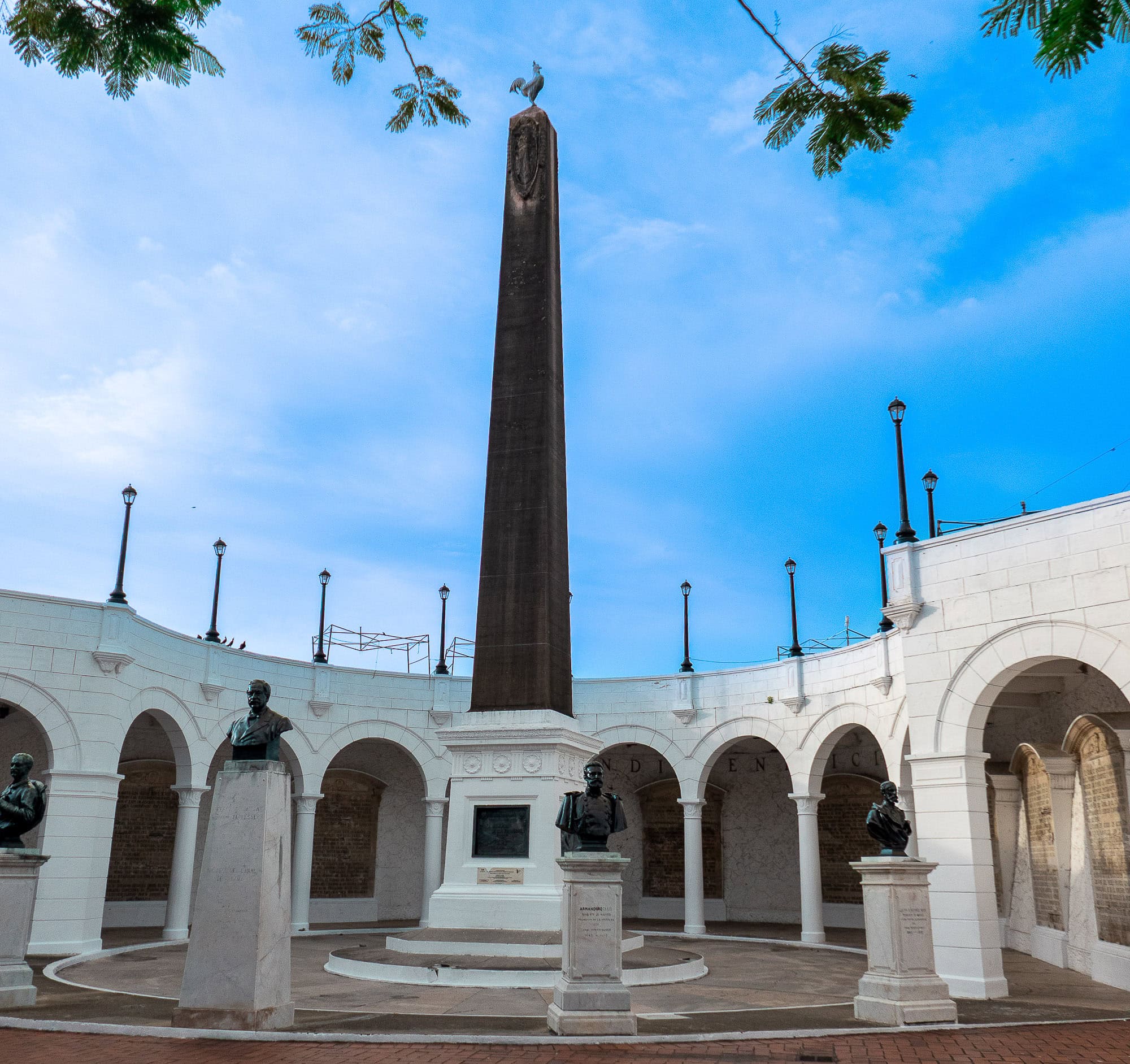
The plaza tells that story through its hemicycle, obelisk and busts of figures connected with the French undertaking. At the top of the obelisk stands the Gallic rooster, a national symbol of France. Nearby inscriptions help explain Panama’s role as a passage between oceans and continents. This is not simply a beautiful viewpoint. It is a monument to ambition, sacrifice, failure and the persistence of an idea.

Plaza de Francia Under Restoration
Plaza de Francia is currently undergoing an extensive restoration. At the time of writing, substantial parts of the monument and surrounding public space are closed. This is not simply a fresh coat of paint or new landscaping. The work includes the hemicycle, historic metalwork, obelisk, busts, drainage, electrical systems and sections of the colonial wall.
The restoration should preserve as many original elements as possible. Several busts have been temporarily removed for specialist treatment. Materials within the hemicycle are also receiving careful attention. Beneath the visible beauty, ageing infrastructure requires equally important work. That combination makes the project complicated, expensive and necessary. I am particularly interested in how the landscaping will change over time. The plaza has always possessed one of Casco Viejo’s most remarkable settings. Its design must respect the monuments while allowing visitors to understand their story. Once completed, the restored space should explain the French Canal period more clearly and welcome people back into the plaza.
What Visitors Can Still Experience
The restoration does not mean visitors must avoid this part of Casco Viejo entirely. Although sections are closed, the surrounding route remains worth exploring. Visitors can continue along the street toward the Ministry building and reach part of the waterfront area. Access restrictions may change as construction progresses, so visitors should respect barriers and posted instructions.
From the accessible overlook, the landscape opens across the Bay of Panama. The Bridge of the Americas appears in the distance, marking the Pacific entrance to the Panama Canal. Ships wait offshore or move slowly toward the canal. Behind you stand the walls, rooftops and towers of the historic city.
This contrast has always made the area special. One view carries you toward Panama’s colonial past and the French Canal story. Another looks toward the waterway that transformed international trade. Few places connect Panama’s history and geography so naturally.
Even during the restoration, visitors can photograph the bay, the Bridge of the Americas, and portions of Casco Viejo’s waterfront. The experience is different from visiting the fully open plaza, but it remains worthwhile. Construction barriers tell their own temporary story. They show that historic places require continued care rather than remaining beautiful without effort.
Before, During and Eventually After
I photographed Plaza de Francia before the present work began. Those images have become more valuable now that the familiar landscape is changing. I intend to return during the restoration and photograph several views from the same positions. When the project is finished, I can complete the sequence with the restored plaza. Those photographs will create more than an attractive comparison. They will document one moment in the continuing life of Casco Viejo. Visitors often imagine historic places as finished scenes from the past. In reality, they are constantly repaired, interpreted, and adapted. Plaza de Francia allows us to watch that process unfold.

Plaza Quinto Centenario: Casco Viejo’s Modern-Day Plaza
The four historic plazas developed within the streets and walls of old Casco Viejo. Plaza Quinto Centenario belongs to a different chapter. Positioned near the waterfront entrance, it was designed as a cultural plaza for modern public life. Its Amphitheatre gives the neighborhood an outdoor venue without placing every large event inside the historic center.
A New Kind of Public Room
Plaza Quinto Centenario does not possess the colonial history of Plaza de la Independencia. It lacks Plaza Bolívar’s intimacy and Plaza Herrera’s long transformation. However, it performs many of the same social functions. People meet there, rest, take photographs, and gather for public events. In that sense, it has become Casco Viejo’s modern-day plaza.
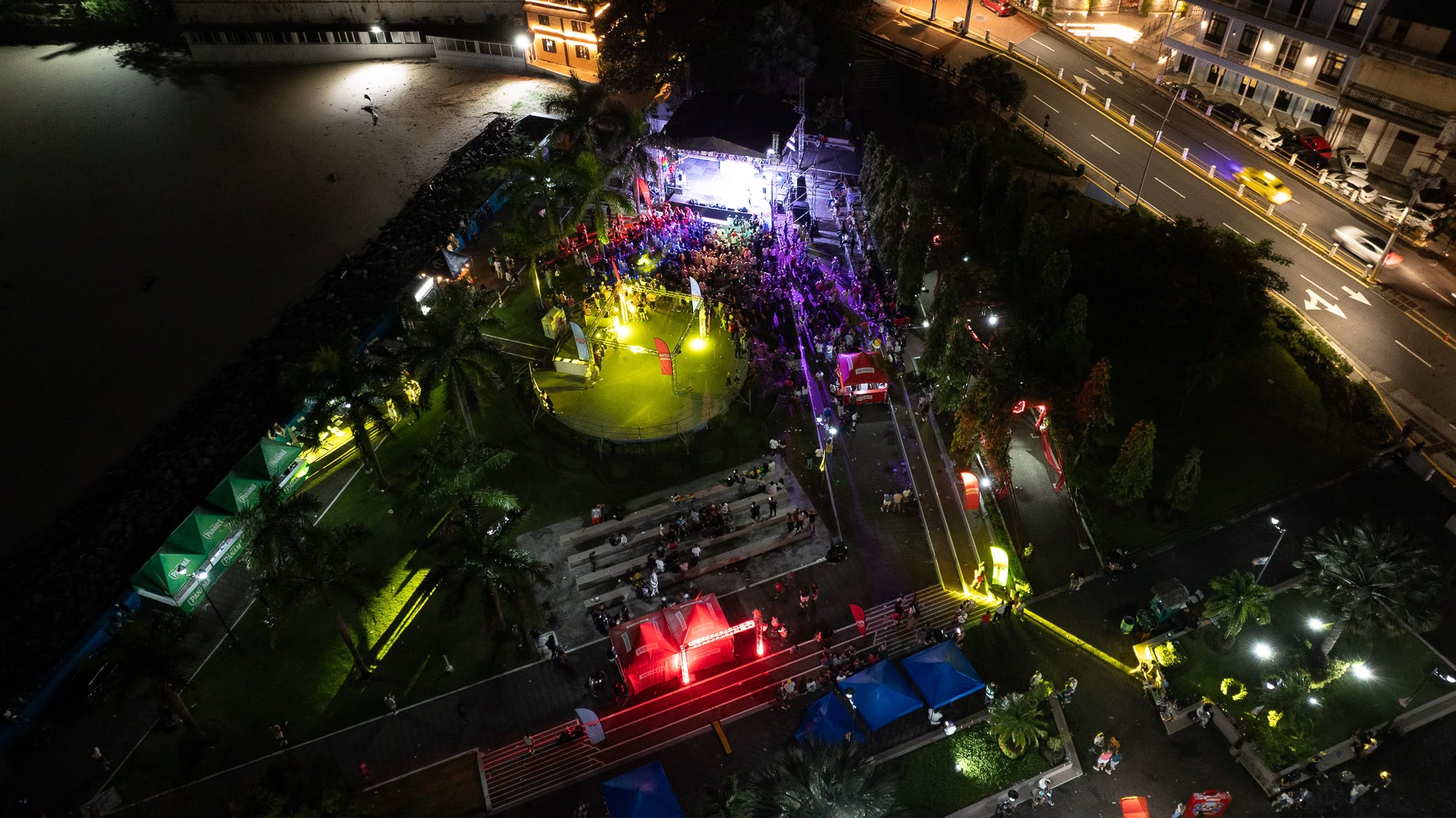
The Amphitheatre provides a structured setting for performances, festivals, ceremonies and community celebrations. Events once confined within Casco Viejo can now use a larger space beside the neighborhood. This reduces pressure on the historic plazas while keeping cultural activity connected to the old city. The plaza extends Casco’s public life rather than competing with its traditional spaces.
Its design also reflects a different period in Panama’s development. Historic monuments do not define the space. Instead, its identity comes from openness, movement, views and the activities staged there. The architecture frames the Amphitheatre and helps guide people through the surrounding public area. It feels less ceremonial than the older plazas, which makes it particularly adaptable.
Casco Viejo Between Two Cities
The location gives Plaza Quinto Centenario much of its appeal. From the waterfront, visitors can look back toward Casco Viejo and the Presidential Palace. Beyond them, the modern skyline rises across the bay. Few viewpoints show Panama City’s different identities within one broad scene.
The plaza has therefore become a natural place for photographs. Visitors can capture historic rooftops, government buildings, the waterfront, and the contemporary city from one area. During events, those views become part of the setting. Panama’s past and present appear together behind the performers and crowds.
This is why I consider the Amphitheatre a modern-day plaza. It is not merely an event venue placed beside Casco Viejo. It has become a place where people gather without needing a formal occasion. Some arrive for performances, while others come for the view or an evening walk. That everyday use gives a public space its real meaning.
Plaza Quinto Centenario also gives our journey through Casco Viejo’s plazas an appropriate ending. The four historic squares reveal how public life developed inside the old city. The Amphitheatre shows how that tradition continues beyond the original urban plan. Casco Viejo has preserved its public rooms while creating another one for a changing city.

How to Explore the Plazas of Casco Viejo
The plazas of Casco Viejo sit within a compact and walkable historic neighborhood. However, they should not become boxes checked during a hurried tour. Each plaza changes throughout the day, and much of its character appears only when visitors stop moving.
A Natural Walking Route
I have always believed Casco Viejo is best explored at your own pace. That belief shaped my Self–guided Casco Viejo walking tour. A scheduled group must eventually keep moving, even when a plaza deserves another fifteen minutes. A self-guided route provides history and direction without deciding how long you should remain. You can stop for photographs, enter a church, order coffee or simply watch the neighborhood around you. The plazas reward exactly that kind of unhurried wandering.
Choosing the Right Time
Early morning offers cooler streets, softer light and fewer visitors. This is usually the best time for architectural photographs. The plazas feel quieter, and details become easier to notice without large groups passing through. Morning also reveals the ordinary routines of residents, workers, and businesses opening for the day.
Late afternoon creates a different atmosphere. Restaurants begin preparing for dinner, lights appear, and the heat gradually lifts. Plaza Bolívar becomes especially inviting as tables fill and conversations carry across the square. Plaza Herrera also grows livelier as people move between hotels, restaurants and evening destinations.
Visitors should allow extra time around Plaza de Francia. Parts remain closed during restoration, although portions of the surrounding waterfront route remain accessible. Barriers and permitted walking areas may change as work progresses. Even with those limitations, the bay and Bridge of the Americas remain worth seeing.
Comfortable shoes are essential because Casco Viejo contains uneven pavements, steps and historic surfaces. Carry water, especially during the warmer middle hours. Most importantly, sit in at least one plaza without consulting a map. Casco Viejo reveals far more when you stop treating it as a list of attractions.
Fast Facts About the Plazas of Casco Viejo
- Historic plazas: Plaza de la Independencia, Plaza Bolívar, Plaza Herrera and Plaza de Francia.
- Modern public space: Plaza Quinto Centenario and its waterfront amphitheater.
- Location: All five spaces sit within or immediately beside Casco Viejo’s compact historic district.
- Admission: Visiting the plazas is free.
- Recommended time: Allow two or three hours for an unhurried walk, photographs and occasional stops.
- Best morning photography: Plaza de la Independencia and Plaza de Francia offer strong architecture and softer early light.
- Best evening atmosphere: Plaza Bolívar becomes particularly inviting as restaurants and surrounding buildings illuminate the square.
- Current restoration: Parts of Plaza de Francia remain closed while extensive conservation work continues.
- Waterfront views: Accessible areas near Plaza de Francia overlook the bay and Bridge of the Americas.
- Events: Plaza Quinto Centenario’s amphitheater regularly provides space for performances, festivals and community gatherings.
- What to wear: Comfortable shoes are important because pavements, steps and historic surfaces can be uneven.
- What to carry: Bring water, sun protection and a camera or fully charged telephone.
- Best approach: A self-guided route allows visitors to explore each plaza without following a fixed group schedule.
Questions and Answers About the Plazas of Casco Viejo
Casco Viejo has four principal historic plazas. They are Plaza de la Independencia, Plaza Bolívar, Plaza Herrera and Plaza de Francia. Plaza Quinto Centenario provides a fifth, more modern public gathering space beside the historic neighborhood.
Parts of Plaza de Francia are currently closed for restoration. However, visitors can still explore portions of the surrounding route and accessible waterfront area. Construction boundaries may change, so always follow posted instructions and barriers.
Allow at least two or three hours for an enjoyable visit. This provides time for photographs, historical sites and occasional stops. Visitors planning lunch, museums or churches should reserve half a day.
No admission fee is required to visit the public plazas. Nearby museums, attractions or special events may charge separately. Churches may also restrict access during services, weddings or private ceremonies.
No admission fee is required to visit the public plazas. Nearby museums, attractions or special events may charge separately. Churches may also restrict access during services, weddings or private ceremonies.
Yes. Casco Viejo’s compact layout makes it well suited to independent exploration. A self-guided walking tour provides context while allowing visitors to control their own pace.
Plaza Bolívar offers the most intimate combination of restaurants, historic architecture, and evening activity. Plaza Herrera provides a livelier and more contemporary atmosphere. Both feel different after sunset than during the daytime.
Casco Viejo is far more active and visited than during my first experiences in 2008. Visitors should still use normal urban precautions and remain aware of their surroundings. Comfortable footwear is important because several streets and pavements are uneven.
Plaza Quinto Centenario is a newer cultural plaza beside Casco Viejo. Its Amphitheatre hosts performances, festivals, and public gatherings. The waterfront setting also provides views toward Casco Viejo, the Presidential Palace and Panama City’s skyline.
Closing Thoughts: What the Plazas of Casco Viejo Reveal
I sometimes think about how carefully we moved through Casco Viejo during those first visits. We noticed every quiet street, unfamiliar corner, and reason to reconsider our route. The plazas existed, but they had not yet recovered their role within daily life. Their architecture remained, while much of the human activity around them had faded.
Nearly two decades later, I often see people sitting where few visitors once considered stopping. Children cross the squares, restaurants prepare for dinner, and wedding parties gather beneath restored façades. Residents greet each other while guides explain the same buildings in several languages. These ordinary moments represent Casco Viejo’s recovery more convincingly than any polished photograph.
The work is not finished, and perhaps it never should be considered finished. Plaza de Francia is again changing as specialists restore its monuments, infrastructure, and relationship with the waterfront. Plaza Quinto Centenario shows how Casco Viejo can create new public spaces without imitating its colonial past. Both remind us that preservation requires movement as well as memory.
The plazas of Casco Viejo are beautiful, but beauty is only their surface. Their deeper value comes from what people have done within them. They have witnessed ceremony, abandonment, recovery, conversation, and celebration. They connect Panama’s national history with the routines of people living and working here today.
If you visit them, allow enough time to sit somewhere without an agenda. Watch how the light moves across the buildings and how people enter and leave the square. Listen to the conversations, church bells, and evening sounds around you. Casco Viejo’s story is written across its monuments, but its living character remains in its plazas.
Thank You for Reading
Thank you for taking the time to read this blog about the Plaza in Casco Viejo. I hope it has helped you better understand the history, character, and daily life surrounding one of the most important gathering places in Panama’s historic district.
If you are exploring Casco Viejo on your own, it is important to understand where the neighborhood begins and ends. Visitors can sometimes wander beyond the managed historic district without realizing it. This is why taking a guided tour—or following a carefully planned self-guided walking tour—can make your visit safer, easier, and more enjoyable.
Here are three additional guides to help you experience Casco Viejo and Panama:
- 📍 Casco Viejo Boundaries — Understand where Casco Viejo begins and ends, why its boundaries matter, and how to avoid wandering into areas that operate differently from the protected historic district.
- 🐟 Casco Viejo Fish Market — Experience an authentic part of Panama’s daily life and discover the morning rhythm, flavors, and culture surrounding the historic neighborhood.
- 🎉 Panama Holidays and Celebrations — Learn about the national holidays, festivals, and traditions that can make your visit to Panama even more memorable.
I look forward to welcoming you to Panama.
— James P. Rice
Founder & Publisher, CascoViejo360.com
Casco Viejo Walking Tour
Explore Casco Viejo at your own pace with a flexible self-guided walking route designed for your phone.
- No groups, no schedules
- Start anywhere, stop anywhere
- Works on phone or desktop
Panama City In 24 Hours
A carefully paced local itinerary for travelers with limited time who still want to experience Panama properly.
- Arrival day made simple
- Rooftops, dining & local rhythm
- Smart airport timing
Three Nights & Four Days
A flexible Panama itinerary centered around Casco Viejo, designed to help you arrive calmly and plan with confidence.
- Casco Viejo as your base
- Smart day trips and dining
- Timing without overplanning
Where to Stay in Casco Viejo
Discover the best hotels in Casco for recovery—quiet, stylish, and just minutes from Panama’s top clinics and hospitals.
View HotelsHealthy Dining for Recovery
Explore Casco’s best cafes and restaurants with clean, recovery-friendly menus that nourish without sacrificing flavor.
Explore DiningGentle Self-Guided Walks
Take a scenic stroll through Casco Viejo’s historic streets—perfect for movement, recovery, and reconnecting with the beauty around you.
View ToursJames P. Rice
James P. Rice purchased a home in Casco Viejo in 2008 and brings more than 40 years of hospitality, restaurant, tourism, and convention industry experience to CascoViejo360.com.
His background includes leadership positions with Ritz-Carlton and Hyatt Hotels, executive roles with major convention centers, and ownership of restaurants and pubs in both the United Kingdom and the United States.
Every article, hotel, restaurant, rooftop venue, attraction, and experience featured on CascoViejo360.com is selected through local knowledge, personal experience, and professional review, with careful consideration given to visitor experience, service standards, authenticity, and its contribution to the overall Casco Viejo and Panama City visitor experience.