
The Story of Casco Viejo’s Revival: A Personal Perspective Since 2008
Introduction
When people ask Why We Moved to Panama, they occasionally tell me how lucky I was.
They point to Casco Viejo’s transformation, the growth of tourism in Panama, and the increasing international attention the neighborhood receives today. Looking from the outside, it can certainly appear that way. A historic district surrounded by water, beautifully restored buildings, boutique hotels, rooftop bars, and visitors from around the world sounds like the sort of opportunity that simply appeared at the right time.
But that is not the full story of Why We Moved to Panama.
The truth is somewhat different.
Long before we arrived in Panama, my wife Leanne and I spent nearly three months researching the country. We downloaded reports, read articles, studied neighborhoods, and compared destinations throughout the region. Like many people considering a move abroad, we wanted to understand healthcare, infrastructure, quality of life, accessibility, and whether Panama could realistically become part of our future.
This was never intended to be a vacation story.
This was the beginning of a life decision.
Looking back, I often think this is one of the reasons people misunderstand opportunity. They see the outcome but rarely see the preparation. They see the restored buildings, the thriving restaurants, and the growth of tourism, but they do not see the months of research, the questions asked, the risks considered, and the countless conversations that happen before a decision is made. That preparation is a major part of Why We Moved to Panama.
When people ask me today why we chose Panama, my answer is simple. We came looking for a place where we could eventually build a life. What we discovered was a country that exceeded our expectations and a neighborhood that would ultimately become home.
What follows is not a history lesson about Casco Viejo. There are plenty of articles that can tell you when buildings were constructed, when restoration projects began, or when UNESCO designated the district as a World Heritage Site.
This is something different.
This is the story of Casco Viejo’s revival as I experienced it. It is the story of a neighborhood, a community, and a country that I have been fortunate enough to watch evolve since 2008.
Arriving in Panama With a Plan
Leanne and I arrived in Panama on February 13, 2008.
At the time, Panama was still emerging onto the radar of many international travelers and retirees. Tourism was growing steadily, but it had not yet become the destination many people recognize today. Conversations about moving to Panama were far less common, and many of our friends questioned why we were even considering it.
Fortunately, my career in hospitality had taught me the importance of looking beyond popular opinion. Over four decades in hotels, restaurants, convention centers, and destination marketing, I learned that some of the most successful destinations are often discovered long before they become fashionable.
For our first visit, we booked 5 days at the Bristol Hotel in Panama City. During my research, I had learned about the hotel’s reputation and appreciated its connection to some of the great independent luxury properties I admired. We knew that even if Panama was not the right fit, we would enjoy our stay and return home with valuable information.
We arrived with an open mind if Panama lived up to our expectations, that would be wonderful. If it didn’t, we would simply continue our search elsewhere.
What happened next was something neither of us anticipated.
Within twenty-four hours of arriving, we found ourselves standing in Casco Viejo.
Discovering Casco Viejo for the First Time
When we first arrived in Casco Viejo, it was immediately clear that we were looking at something very different from the Panama City most visitors experience today.
The neighborhood certainly was not polished. Restoration projects were underway, many buildings still awaited investment, and tourism was only beginning to discover what residents and preservationists had known for years. There were only a handful of restaurants, a convenience store, and a small community of people who genuinely believed in the future of the district.
What struck me was not what Casco Viejo was at that moment.
It was what it could become.
Growing up in Poole on England’s south coast and spending my career in hospitality and destination management, I had developed an appreciation for places with a strong sense of identity. Successful destinations rarely emerge by accident. They are usually built upon a combination of history, character, accessibility, and people willing to invest their time and energy into creating something meaningful.
Seeing the Potential and Why We Moved to Panama
As we walked through the neighborhood that morning, I could see all of those ingredients beginning to come together.
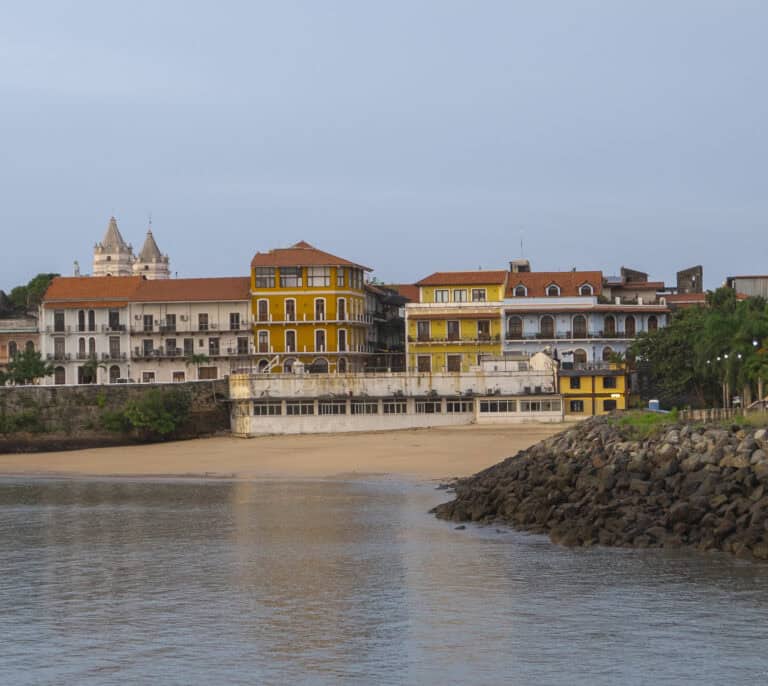
The architecture alone was remarkable. As we explored and confirmed Why We Moved to Panama, we discovered that within a relatively small area, centuries of history were reflected in the buildings around us. Spanish Colonial influences stood alongside French, Republican, and Neoclassical architecture. Cobblestone streets, public plazas, historic churches, and waterfront views combined to create a setting unlike anything else in the region.
More importantly, the neighborhood felt authentic.
This was not a purpose-built tourism destination. It was a living community. Families lived here. Businesses operated here. Government institutions were located here. The Presidential Palace, churches, museums, and cultural landmarks all existed within a few minutes’ walk of one another.
I remember thinking that if restoration continued thoughtfully, Casco Viejo could eventually become one of the most interesting urban destinations in the Americas. Looking back, that may sound like a bold statement. At the time, however, it simply felt obvious.


Taking the Leap, Why We Moved to Panama
Many people have since asked how we could purchase property after seeing the neighborhood for only a few hours. The reality is that our decision did not begin that morning. It began months earlier through research and a clear understanding of what we wanted in the next chapter of our lives.
Much of the credit belongs to Leanne. With a background in both history and design, she immediately recognized what many others overlooked. Where some saw aging buildings, she saw timeless architecture, authentic craftsmanship, and a neighborhood with extraordinary potential. Those early observations helped shape the foundation of EnVogue Design & Development and a long-term commitment to preserving the character and heritage of Casco Viejo. Nearly two decades later, her instincts proved remarkably accurate.
Casco Viejo simply confirmed Why We Moved to Panama. By the end of that afternoon, we had purchased property. To some people, that sounded reckless. To us, it felt entirely logical. The people we met were genuine, the vision for the neighborhood was compelling, and there was a sense of momentum that was impossible to ignore.
Looking Back on Why We Moved to Panama
Friends back home thought we were slightly crazy. Some questioned why anyone would move to Panama. Others doubted whether tourism would ever become a meaningful part of the country’s future.
Those questions seem almost amusing today.
Over the years, Panama has become one of the most connected countries in the Americas. Tourism expanded, international hotel brands arrived, and the meetings and incentive industry began taking notice. Visitors from around the world discovered what many residents had quietly known for years.
Yet in 2008, none of that was guaranteed.
What we purchased was not a finished product. It was a belief in what Casco Viejo could become. We invested in a possibility.
Fortunately, we were not alone.
What Casco Viejo Was Like in 2008
One of the challenges of writing about life in Casco Viejo today is helping people understand just how different the neighborhood felt in 2008.
Visitors arriving today are greeted by boutique hotels, rooftop lounges, designer shops, coffee houses, museums, and restaurants representing cuisines from around the world. The neighborhood feels vibrant throughout much of the day and evening, with a constant flow of both local residents and international visitors exploring its streets.
The Casco Viejo we encountered was much quieter.
Many buildings remained empty, and restoration projects were visible throughout the district. Construction crews worked alongside residents who had already committed themselves to the neighborhood’s future. There was a shared understanding that everyone was participating in something larger than themselves. Looking back, those early signs reinforced Why We Moved to Panama. While the neighborhood was still finding its footing, there was an unmistakable sense that important things were beginning to happen.

A Community Built on Optimism
One of the things I remember most clearly was the optimism.
People talked about possibilities rather than problems. Business owners supported one another. Residents knew one another. Walking through the neighborhood often felt less like being in a city and more like being part of a village where everyone shared a common goal. The excitement was contagious, and that sense of collective purpose created an energy that was difficult to ignore.
Nobody expected change to happen overnight. Restoration on this scale never does. Yet there was a genuine belief that Casco Viejo represented one of the most important preservation projects in Panama. The buildings mattered, of course, but the community mattered even more.
The Difference Between Restoration and Community and Why We Moved to Panama
That remains true today.
Buildings can be restored. Communities must be built.
The people who arrived during those early years understood that distinction, and I believe it played a significant role in shaping the character of the neighborhood visitors experience today. Looking back, it becomes clear that the success of Casco Viejo was never solely about architecture or investment. It was about creating a place where people wanted to live, work, invest, and contribute.
The restored buildings may capture visitors’ attention, but it was the people, the optimism, and the shared belief in the future that helped transform Casco Viejo into the neighborhood we know today.
The People Behind Casco Viejo’s Revival
When visitors walk through Casco Viejo today, it is easy to focus on the buildings.
The restored facades, boutique hotels, rooftop terraces, plazas, churches, and waterfront views naturally attract attention. Yet one of the lessons I learned very early is that the story of Casco Viejo has never really been about the buildings.
The story has always been about the people.
The buildings were here before most of us arrived, and with proper stewardship they will remain long after we are gone. What transformed Casco Viejo was the collective effort of thousands of individuals who believed the neighborhood deserved a future that respected its past.
Some were Panamanian architects and preservationists who fought tirelessly to protect the district’s historic character. Some were investors willing to take risks when others saw only challenges. Some were business owners opening restaurants, cafés, galleries, and shops long before visitor numbers could justify the investment. Others were residents who simply chose to make Casco Viejo their home and become part of the community. Meeting people like this further confirmed Why We Moved to Panama.
The Role of Preservation and Why We Moved to Panama
One of the most important organizations throughout this process has been Patrimonio Histórico, the government body responsible for helping preserve the architectural integrity of the district. Their role has never been easy. Balancing restoration, development, private investment, tourism, and preservation requires constant attention and difficult decisions.
Like every historic district in the world, there have been debates. Some projects fit naturally within the neighborhood. Others have generated discussion. Anyone who has lived in a UNESCO World Heritage Site understands this reality. Preservation is rarely black and white. It involves balancing progress with responsibility and finding ways to allow communities to evolve without losing the character that made them special in the first place. Experiencing that balance firsthand became another reason Why We Moved to Panama has always felt like the right decision.
Navigating Growth
For the most part, I believe Casco Viejo has done an extraordinary job navigating that balance.
Certainly, there have been growing pains. Every successful destination experiences them. As visibility increases, new investors arrive. New ideas emerge. Expectations change. Some projects succeed. Others struggle. Some businesses thrive while others quietly disappear. That is the natural cycle of every destination that experiences growth.
What impressed me most during those early years was that despite different backgrounds and viewpoints, many people shared a common objective. They wanted Casco Viejo to succeed. Not simply as a tourism destination. Not simply as an investment opportunity. But as a neighborhood that future generations could be proud of.
That commitment remains visible today.
Looking to the Future and Why We Moved to Panama
In recent years, one of the most encouraging developments has been watching younger Panamanians begin investing in Casco Viejo. Many have studied abroad, traveled extensively, and returned with fresh ideas and a deep appreciation for the importance of preserving their country’s cultural heritage.
Seeing that the next generation step forward gives me tremendous confidence in the future.
After all, the long-term success of Casco Viejo was never going to be determined by my generation or the pioneers who arrived during the early stages of restoration.
The future belongs to those who will inherit it.
Fortunately, I believe it is in very capable hands.


How Tourism Changed Casco Viejo
Although restoration was already underway when we arrived, tourism ultimately became one of the driving forces behind Casco Viejo’s transformation.
That statement occasionally surprises people because tourism often receives criticism. In some destinations, rapid growth can place pressure on infrastructure, housing, and local communities. Those concerns should always be taken seriously. In the case of Casco Viejo, however, tourism helped provide the economic foundation necessary to support preservation. Historic buildings require investment, museums require visitors, restaurants require customers, and hotels require guests. Without a sustainable economic model, restoration projects eventually stall. Tourism helped create that model, and understanding that became another reason Why We Moved to Panama.
The Early Visitors
One of the biggest changes I witnessed was the gradual shift in the type of visitor arriving in Casco Viejo. In the early years, many travelers were adventurous and independent. They were willing to explore destinations before they appeared in mainstream travel publications and often discovered Casco Viejo through word of mouth, guidebooks, or recommendations from fellow travelers.
Over time, that began to change. Boutique hotels opened, international media started paying attention, more restaurants arrived, and improved air connectivity made Panama increasingly accessible. What had once been a destination known primarily to experienced travelers gradually entered the mainstream tourism conversation.
The Connectivity Advantage and Why We Moved to Panama
Another major turning point was the continued expansion of Copa Airlines and the transformation of Panama into one of the most connected aviation hubs in the Americas. Today, travelers can reach Panama directly from cities throughout North America, South America, Central America, Europe, and the Caribbean.
For anyone who has spent a career in tourism, accessibility is everything. A destination can offer extraordinary attractions, beautiful architecture, and exceptional experiences, but if visitors struggle to reach it, growth becomes difficult. Panama solved that challenge exceptionally well, creating a competitive advantage that continues to benefit the entire country. Accessibility and connectivity became another important reason Why We Moved to Panama.
The Power of the Stopover
The introduction of stopover programs added another layer of visibility. Travelers passing through Panama suddenly had an easy opportunity to spend several days exploring the country rather than simply changing planes on their way elsewhere. Many of those visitors found their way to Casco Viejo. They explored the plazas, visited the museums, dined in the restaurants, and experienced a neighborhood unlike any other in the region. Just as importantly, many returned and encouraged others to do the same. Having spent years helping visitors discover Panama, that growing interest is one of the reasons I later created resources such as the Casco Viejo Self-Guided Walking Tour, Panama in 24 Hours, and Three Nights, Four Days in Panama—practical guides designed to help travelers make the most of their time in the country

A Rising Hospitality Industry
Tourism growth also encouraged significant hotel investment throughout Panama City. International brands entered the market, existing hotels expanded, and service standards continued to improve. As visitor numbers increased, expectations rose, and the hospitality industry responded by investing in both facilities and people.
The result was a more mature tourism ecosystem that benefited not only visitors but also local businesses, employees, entrepreneurs, and residents who saw new opportunities emerge throughout the city.
A Destination Still Evolving
What fascinates me most is that the evolution continues. The visitor profile keeps changing. Backpackers and independent travelers are still part of the story, but today they are joined by luxury travelers, destination wedding groups, incentive programs, cruise passengers, food enthusiasts, and cultural travelers seeking authentic experiences.
In many ways, Casco Viejo has become a reflection of Panama itself—diverse, welcoming, international, and constantly evolving while remaining connected to its history and identity.
Why Casco Viejo Matters to Panama
One of the things I often explain to visitors is that Casco Viejo is far more than a beautiful neighborhood.
It is, in many ways, the cultural and historical heart of Panama.
Within a relatively small area of approximately 39 acres, you will find some of the country’s most important institutions, landmarks, museums, and public spaces. The Presidential Palace sits here. The National Theatre is here. The Canal Museum is here. Government offices, embassies, churches, plazas, and monuments all contribute to a district that continues to play an important role in the life of the nation.
What makes Casco Viejo particularly unique is that it remains a functioning neighborhood rather than an outdoor museum. People live here, work here, attend school here, worship here, and conduct government business here. Visitors are not walking through a recreated historic attraction. They are experiencing a living community that continues to evolve while remaining connected to its past. That living, breathing quality is one of the clearest examples of Why We Moved to Panama.
A Living Community
That distinction matters.
Many historic districts around the world struggle because they eventually become disconnected from everyday life. Buildings are preserved, but communities disappear. Shops become souvenir stores, residents move away, and authenticity slowly fades.
Casco Viejo has managed to avoid much of that trap.
The neighborhood still belongs to the people who live, work, worship, and invest here. Visitors simply become part of the experience.
Tradition and Cultural Identity
One of the most visible examples of this connection can be seen during Semana Santa.
Over the years, Easter celebrations in Casco Viejo have grown significantly. What was once primarily a religious observance has become one of the most important cultural periods of the year. Processions move through the streets, churches welcome thousands of visitors, and residents gather to celebrate traditions that have existed for generations.
For travelers fortunate enough to experience Semana Santa in Panama, it offers a completely different perspective of Casco Viejo. The neighborhood slows down. The focus shifts from tourism to tradition. History becomes something you can see, hear, and experience firsthand.
It serves as a reminder that beneath the restaurants, rooftop bars, and boutique hotels lies a community with deep cultural roots.


Preserving the Past
The restoration of the Cathedral Basilica Santa María la Antigua is another example of how much has changed since we arrived. The transformation has been remarkable and stands as one of the most important preservation projects completed in the district during my time here.
For many visitors, the Cathedral has become one of the defining images of modern Casco Viejo. Yet its significance extends far beyond architecture. It represents a commitment to preserving the cultural and spiritual heritage of Panama for future generations.
Gateway to Panamá
Another major contributor to Casco Viejo’s visibility has been the Cruise industry.
A cruise line does not select destinations randomly. Every port must offer experiences that justify bringing thousands of visitors ashore. Beaches alone are rarely enough. Travelers are looking for culture, history, food, architecture, and authentic experiences that cannot be replicated elsewhere.
Casco Viejo delivers all of those elements.
As cruise operations expanded in Panama, the neighborhood became an obvious destination for shore excursions. Visitors could walk through centuries of history, explore museums, enjoy local cuisine, and experience one of the most important cultural districts in Central America, all within a compact and highly walkable environment.
The same logic applies to airline stopover programs. For years, Copa Airlines has helped introduce travelers to Panama through its stopover initiative. Many visitors who originally planned only a connection through Tocumen International Airport suddenly found themselves spending several days exploring the country.
Almost inevitably, they found their way to Casco Viejo.
Understanding Panama
Today, I often tell people that while the Panama Canal remains one of the country’s most famous attractions, nearly everyone who visits Panama eventually visits Casco Viejo as well. The two experiences complement each other. One tells the story of engineering and global commerce. The other tells the story of culture, community, architecture, and identity. Together, they help visitors understand Panama more completely. For me, that is why Casco Viejo matters. It is not simply a destination.
It is one of the places where Panama tells its story.


Casco Viejo Today and Why I Believe the Best Days Are Still Ahead
After living in Casco Viejo since 2008, people occasionally ask whether the neighborhood has reached its peak. My answer is always the same. Not even close.
In fact, I believe some of the most exciting opportunities still lie ahead.
That may sound surprising considering how much has already been accomplished. Hundreds of buildings have been restored, new businesses continue to open, and international recognition has increased dramatically. Tourism has grown, hospitality standards have improved, and the neighborhood has become one of the most photographed and visited destinations in Panama.
Yet whenever I walk through the streets today, I still see opportunity.
I see buildings waiting for restoration. I see young entrepreneurs introducing new ideas. I see investors who understand the long-term value of preserving historic properties rather than replacing them. Most importantly, I see a new generation of Panamanians returning with international experience, fresh perspectives, and a genuine commitment to protecting one of their country’s most important cultural assets. Looking ahead, those same qualities continue to reinforce Why We Moved to Panama.
That gives me tremendous confidence in the future.
Panama’s Next Opportunity
One of the reasons I remain optimistic is that Panama is finally beginning to realize its potential as a meetings, incentives, conventions, and events destination.
Having spent much of my career working in hotels, convention centers, and destination management, I have always viewed tourism through a slightly different lens than most people. Visitors arrive for many reasons, but group business creates a different kind of impact. It fills hotel rooms, supports local businesses, introduces new visitors to a destination, and generates economic benefits that extend well beyond the tourism industry itself.
Today, Panama possesses many of the ingredients meeting planners look for when evaluating a destination. The country offers excellent international air connectivity, modern convention facilities, globally recognized hotel brands, outstanding restaurants, and an increasingly sophisticated hospitality sector. Combined with the cultural experiences available throughout Casco Viejo and Panama City, it creates a compelling proposition for planners searching for something beyond the traditional convention destination. From my perspective, it also continues to validate Why We Moved to Panama.


The Value of Authenticity
What makes Casco Viejo particularly valuable is that it provides something many destinations struggle to deliver: authenticity.
Meeting planners are no longer searching for generic venues that could exist anywhere in the world. They are looking for memorable experiences that connect attendees to a destination and leave a lasting impression long after the event has ended.
Whether it is a dine-around through the neighborhood, a rooftop reception overlooking the skyline, a museum event, a destination wedding, or a private celebration in one of the restored historic buildings, Casco Viejo offers experiences that simply cannot be replicated elsewhere.
That does not mean there is no work left to do.
Every destination evolves. Infrastructure can improve. Service standards can continue to develop. Training and education remain ongoing priorities. Growth inevitably creates new challenges, and successful destinations are those willing to address those challenges before they become problems.
Looking Back — And Looking Forward
When I compare where we are today with where we were in 2008, the progress has been remarkable.
I have spent nearly two decades watching Panama move forward and watching Casco Viejo evolve alongside it. There have been setbacks, disagreements, economic cycles, and growing pains. Every destination experiences them. What continues to impress me is that the overall direction has remained remarkably consistent.
Forward.
Businesses have come and gone. Projects have started and finished. New faces have arrived while others have moved on. Yet the commitment to improving the neighborhood, preserving its character, and creating a destination worthy of Panama’s history has never disappeared.
For someone who believed in Casco Viejo from the very beginning, that is incredibly rewarding to witness. It also reminds me every day Why We Moved to Panama, and why I remain convinced that the most exciting chapters of this story have not yet been written.
The restoration of Casco Viejo is no longer simply a story about preserving the past. It is now a story about shaping the future. And from where I stand today, that future looks exceptionally bright
Facts Many Visitors Don’t Know About Casco Viejo
- Casco Viejo Covers Only About 39 Acres. – One of the most surprising things for first-time visitors is how compact Casco Viejo actually is. Despite its small footprint, it contains some of Panama’s most important churches, museums, government buildings, plazas, restaurants, hotels, and cultural landmarks.
- Nearly Everyone Who Visits Panama Eventually Visits Casco Viejo – The Panama Canal may be the country’s most famous attraction, but Casco Viejo has become one of the most visited destinations in Panama. Whether visitors arrive by cruise ship, airline stopover, business conference, or vacation, most eventually find themselves exploring its streets.
- Casco Viejo Is More Than a Tourist Destination – Unlike many historic districts around the world, Casco Viejo remains a functioning neighborhood. People live here, work here, attend church here, raise families here, and operate businesses here.
- The Neighborhood Contains Several Centuries of Architecture – As you walk through Casco Viejo, you are moving through different periods of Panama’s history. Spanish Colonial, French Colonial, Republican, Neoclassical, Art Deco, and contemporary restoration projects all exist within a few blocks of one another.
- Restoration Is Still Ongoing – Many visitors assume Casco Viejo is finished. It isn’t. Restoration continues today, and there are still buildings waiting for their next chapter.
- Semana Santa Has Become One of the Most Important Times to Visit – The Easter season in Casco Viejo continues to grow in significance. Religious processions, church ceremonies, and community traditions provide visitors with a deeper understanding of Panama’s cultural heritage.
- Panama’s Climate Makes Casco Viejo a Year-Round Destination – Panama experiences a tropical climate throughout the year. While visitors often prefer the dry season between December and April, the green season brings lush landscapes, dramatic skies, and fewer crowds.
- Copa Airlines Helped Change Everything. – Panama’s position as an international aviation hub has played a significant role in the growth of tourism. Improved air connectivity has introduced millions of travelers to Panama and, ultimately, to Casco Viejo.
- Casco Viejo Has Become a Leading Venue for Special Events – Destination weddings, rooftop receptions, private celebrations, corporate events, and incentive programs have become an important part of the neighborhood’s tourism economy.
- The Best Days May Still Be Ahead – Having watched Casco Viejo evolve since 2008, I genuinely believe the neighborhood’s story is still being written. New businesses, new investments, and a new generation of Panamanians continue to shape its future.
Frequently Asked Questions About Life in Casco Viejo, Panama
My wife Leanne and I spent nearly three months researching different countries before arriving in Panama in February 2008. We were looking for a place that offered accessibility, quality of life, stability, and long-term potential. Panama exceeded our expectations, and within twenty-four hours of arriving, we found ourselves purchasing property in Casco Viejo.
The Casco Viejo we discovered in 2008 was very different from the neighborhood visitors experience today. There were only a handful of restaurants, many buildings still awaited restoration, and tourism was just beginning to gain momentum. What stood out most was the optimism of the people who believed in the neighborhood’s future. That optimism became one of the strongest reasons Why We Moved to Panama.
Casco Viejo is famous for its history, architecture, churches, plazas, museums, restaurants, boutique hotels, and UNESCO World Heritage designation. It is widely considered one of the most important cultural destinations in Panama.
Having lived in Casco Viejo since 2008, I can confidently say that the neighborhood has become one of the most popular and heavily visited areas in Panama City. As with any urban destination, visitors should remain aware of their surroundings, but Casco Viejo is generally considered one of the safest and most enjoyable areas for travelers to explore.
Absolutely. In fact, I often recommend that visitors spend either their first night, last night, or ideally both in Casco Viejo. The neighborhood provides an excellent base for exploring Panama City while allowing visitors to experience some of the country’s best restaurants, hotels, museums, and cultural attractions.
Panama is a year-round destination. The dry season, typically from December through April, attracts the largest number of visitors. The green season offers fewer crowds, lush landscapes, and dramatic tropical scenery that many travelers find equally appealing.
Tourism has helped support restoration projects, attract investment, create employment opportunities, and introduce visitors from around the world to the neighborhood. It has transformed Casco Viejo into one of the most recognized destinations in Panama while helping preserve many of its historic buildings.
For many travelers, Casco Viejo serves as the cultural heart of Panama. It complements attractions such as the Panama Canal by offering visitors a deeper understanding of the country’s history, architecture, traditions, and contemporary lifestyle.
Yes. Panama’s international air connectivity, modern convention facilities, hotel inventory, and unique cultural experiences make it increasingly attractive for meetings, incentive travel, conventions, and destination events. Casco Viejo plays an important role by providing venues and experiences that add authenticity to group programs.
What excites me most is seeing a new generation of Panamanians investing in the neighborhood. They bring fresh ideas, international experience, and a deep appreciation for preserving one of the country’s most important cultural assets. Their commitment gives me confidence that Casco Viejo’s best years may still lie ahead.
Closing Thoughts
When I arrived in Panama on February 13, 2008, I could never have imagined how much this country would become part of my life.
At the time, Leanne and I were simply looking for answers. We wanted to know if Panama could someday become home. Like many people considering a major life decision, we arrived with questions, expectations, and a healthy amount of uncertainty about Why We Moved to Panama. What we discovered was a country filled with opportunity, welcoming people, and a quality of life that felt increasingly difficult to find elsewhere.
Casco Viejo was only one small part of that journey in the beginning.
Today, it has become part of who I am.
If You Visit
If you are considering a visit to Panama, I hope you spend time here.
Walk the streets early in the morning before the crowds arrive. Sit in the plazas and watch daily life unfold around you. Visit the churches. Explore the museums. Talk to business owners. Stay for dinner. Stay for sunset.
Stay long enough to discover that the real magic of Casco Viejo is not found in a single building or attraction, but in the atmosphere created by everything working together.
And if you are one of those people researching Panama the way Leanne and I once did, perhaps wondering whether this country could become part of your own story, I can only encourage you to come and see it for yourself.
That is exactly what we did. Nearly two decades later, I am still grateful we did.
The Story Continues
Thank you for taking the time to read this story. It is not simply the story of Casco Viejo’s revival. It is also part of the story of Why We Moved to Panama: the people who believed in it, invested in it, protected it, and helped shape it into what visitors experience today. And if the last eighteen years have taught me anything, it is this:
The story is far from over.
Casco Viejo Walking Tour
Explore Casco Viejo at your own pace with a flexible self-guided walking route designed for your phone.
- No groups, no schedules
- Start anywhere, stop anywhere
- Works on phone or desktop
Panama City In 24 Hours
A carefully paced local itinerary for travelers with limited time who still want to experience Panama properly.
- Arrival day made simple
- Rooftops, dining & local rhythm
- Smart airport timing
Three Nights & Four Days
A flexible Panama itinerary centered around Casco Viejo, designed to help you arrive calmly and plan with confidence.
- Casco Viejo as your base
- Smart day trips and dining
- Timing without overplanning
Meetings in Casco Viejo, Panama
For planners looking beyond ballrooms. Boutique hotels, rooftop receptions, walkable dine-arounds, and real neighborhood character — this is how serious meetings get done here.
PLAN A MEETING HEREDestination Weddings in Casco Viejo
Historic churches, rooftop sunsets, colonial courtyards, and everything within walking distance. If you’re considering Panama, start here before you make a single call.
EXPLORE WEDDINGSCasco Viejo Boundaries
Where Casco truly begins, where it ends, and why that matters. If you’re booking a hotel, planning an event, or buying property — this distinction is important.
UNDERSTAND THE MAPJames P. Rice
James P. Rice purchased a home in Casco Viejo in 2008 and brings more than 40 years of hospitality, restaurant, tourism, and convention industry experience to CascoViejo360.com.
His background includes leadership positions with Ritz-Carlton and Hyatt Hotels, executive roles with major convention centers, and ownership of restaurants and pubs in both the United Kingdom and the United States.
Every article, hotel, restaurant, rooftop venue, attraction, and experience featured on CascoViejo360.com is selected through local knowledge, personal experience, and professional review, with careful consideration given to visitor experience, service standards, authenticity, and its contribution to the overall Casco Viejo and Panama City visitor experience.