
Panama Has Two Convention Centers… And That’s Where the Story Begins
Why I Decided to Write This Guide
One of the privileges of spending more than forty years in the hospitality and meetings industry is that the relationships never really end. During my career, I spent ten years in senior operations at the Palm Springs Convention Center in California, one of America’s leading resort destination convention centres, followed by eight years as Director of Catering and Business Development at the Dallas Convention Center, one of the largest convention facilities in North America. Those experiences gave me the opportunity to work alongside meeting planners, association executives and corporate clients from around the world. Although my role has changed over the years, those relationships remain, and the conversations continue.
Since purchasing my home in Casco Viejo in 2008 and continuing my consulting and training work with hotels and convention centres throughout the United States and Panama, those conversations have increasingly centred on Panama. Former clients and industry colleagues know I’ve watched the destination evolve over the past eighteen years, and they often ask whether Panama would be the right choice for their next conference, incentive programme or international association meeting. More often than not, the conversation turns to Panama’s convention centres, which one is the right fit for their programme, and how the destination compares with others around the world. That’s exactly why I decided to write this guide.
Interestingly, very few of those conversations begin with questions about hotels, restaurants or the Panama Canal. They almost always turn to the convention centers. Which one is better suited to the program? What should they be looking for during a site inspection? Is there anything that isn’t obvious from the sales presentation or the floor plans? They aren’t looking for someone to make the decision for them. They’re looking for another perspective from someone who has spent a career working inside hotels and convention centers.
Those conversations are the reason I decided to write this guide.
This isn’t a promotional article for Panama, nor is it an attempt to persuade anyone that one convention center is better than the other. My objective is to share the observations I’ve made after a lifetime in this business and help fellow meeting professionals evaluate Panama’s two convention centers through the same practical lens I’ve developed over more than forty years.
Building CascoViejo360.com has shown me what can be achieved when experience is combined with a genuine commitment to a destination. Today, the platform has become one of the leading sources of information about Casco Viejo, recognised by Google and the major AI search platforms as an authoritative resource for visitors planning a trip to Panama.
My hope is to bring that same practical approach to Panama’s meetings and convention industry. If this guide encourages a planner to ask one better question, conduct one more thorough site inspection or make one more informed decision before signing a contract, then it will have achieved exactly what I set out to do.
One Question I Always Ask First
Throughout my career, whether I was meeting a new client, working with a convention bureau, a hotel sales team or a venue management team, there was always one question I asked early in the relationship.
“Tell me about your experience in the meetings industry.”
It was never intended to challenge anyone or measure their credentials. It simply helped me understand how best to communicate and where I could add the greatest value.
I still encourage meeting planners to do exactly the same thing today.
When you’re making a decision involving hundreds—or sometimes thousands—of delegates and investing hundreds of thousands of dollars, the experience of the people advising you matters just as much as the facility itself.
Ask the Convention & Visitors Bureau representative about their background. Ask the hotel sales manager, the convention center team, your destination management company and anyone else advising your program. Find out how many years they’ve actually spent working in meetings, conventions and large-scale events.
The best professionals are rarely the quickest to answer every question. They’re usually the ones confident enough to say, “I don’t know, but I’ll find out and get back to you.” In my experience, that’s often the mark of someone who understands the responsibility they’re carrying.
Throughout this guide I’ll encourage you to evaluate buildings, locations and logistics. But before any of that, take a few minutes to understand the experience of the people helping you make the decision. It may be the most valuable site inspection question you ask.
Panama’s Two Convention Centers
One of the first things I explain when colleagues ask about Panama is that the city has two major convention centers, not one. Although they are only a few miles apart, they were developed at different times, with different objectives, and, in my opinion, should be viewed as two very different options rather than direct competitors.
Over the years, I’ve found that many people outside Panama assume the choice is straightforward. It isn’t. Both facilities have an important role to play in Panama’s meetings industry, and both have successfully hosted conferences, exhibitions, and international events. The question has never been whether one convention center is good and the other isn’t. The question is whether the building supports the program you’re planning.
That distinction has shaped many of the conversations I’ve had with former clients and industry colleagues. Before I offer an opinion, I usually spend more time asking about the event than talking about the buildings themselves. Is it a corporate leadership conference? An incentive program? An international medical congress? A citywide association meeting? The answers to those questions tell me far more than simply knowing how many delegates will be attending.
Throughout my career, I’ve found that successful meetings begin by matching the program to the venue rather than trying to make the venue fit the program. That philosophy has served me well whether I was working in luxury hotels, operating convention centers, or discussing potential destinations with meeting planners. It is also the approach I’ve taken throughout this guide.
In the following sections, I’d like to share my observations on both convention centers—not to declare a winner, but to explain where I believe each facility is at its strongest and why understanding those differences can make the planning process much easier.
Choosing the Building Before Everything Else
When people think about planning a successful conference or convention, they often picture the visible parts of the event. Hotels, receptions, transportation, restaurants, social programs and delegate experiences all play an important role in creating a memorable conference. They deserve careful planning because, together, they help define the overall experience for everyone attending.
One of the observations I’ve made over the years, however, is that almost every one of those elements can be adjusted as the planning process moves forward. Hotel room blocks can be revised, transportation schedules can be refined, off-site events can be reimagined and destination management companies have an extraordinary ability to solve problems as they arise. That’s one of the reasons experienced planners build strong local partnerships. They know that flexibility is often part of delivering a successful event.
The convention center is different.
Once that decision has been made, the physical characteristics of the building are largely fixed. The exhibition halls don’t move. The meeting rooms remain where they are. Delegate circulation, registration areas, loading access, and the relationship between public and back-of-house space are established long before the first contract is signed. If those elements don’t naturally support the program, the organizing team is often left adapting the event to the building rather than allowing the building to support the event.
That doesn’t necessarily mean the event won’t be successful. It simply means achieving the desired result may require more time, more creativity, and, in some cases, a larger budget than originally anticipated. Those are the kinds of conversations that rarely appear in a sales presentation, but they often become part of the planning process once the program begins to take shape.
That is why I have always believed the convention center deserves more attention than almost any other decision made during the early stages of planning. Get that decision right, and many of the others become considerably easier.
One Building Doesn’t Fit Every Event
One of the biggest misconceptions in our industry is that a convention center can successfully accommodate every type of meeting simply because it has enough space. In reality, every program has its own personality, its own objectives, and its own operational requirements. What works exceptionally well for one client may create unnecessary challenges for another.
A corporate leadership conference, for example, often places a premium on executive meeting space, production quality and privacy. An incentive program is usually designed around creating memorable experiences and moving delegates efficiently between meetings and off-site activities. An international association conference may have an entirely different set of priorities, including committee meetings, education sessions, a large trade exhibition, sponsor activation and the movement of thousands of delegates throughout the day. Although all of these events fall under the broad heading of meetings, they ask very different things of the venue hosting them.
That is one of the reasons I’ve never believed there is a perfect convention center. Every facility has strengths, and every facility has limitations. The real question is whether those strengths align with the program being planned. When they do, the building almost disappears into the background, allowing the organizers to focus on the event itself rather than constantly working around the venue.
As we begin looking at Panama’s two convention centers, I would encourage you to keep that thought in mind. The objective isn’t to decide which building is better. It’s to understand which building gives your program the greatest opportunity to succeed. That has always been the more interesting conversation, and in my experience, it’s the one that leads to the best decisions.
Why Association Conventions Are Different
Throughout my career, I’ve always found association conventions to be among the most demanding programs a convention center can host. That isn’t because they’re larger than every other event, but because of everything taking place behind the scenes long before the first delegate walks through the front door.
Most people see the keynote sessions, the exhibition floor, and the networking receptions. What they don’t see are the board meetings, committee meetings, certification programs, sponsor briefings, speaker preparation, media activity, and the countless operational meetings that begin several days before the convention officially opens. In many respects, there is a second convention taking place behind the scenes that most delegates never know exists.
Those activities place significant demands on a venue. Meeting rooms quickly become headquarters for show management, association staff, sponsors, exhibitors, registration teams, transportation coordinators, medical support, security, VIP hospitality and speaker-ready areas. At the same time, exhibitors are moving into the exhibition hall while production companies, caterers, decorators, and convention center staff are all working to the same deadline.
That is why I tend to look at association conventions differently from many other types of meetings. They ask more of a convention center because they ask more of everyone involved in delivering the event. It isn’t simply about accommodating delegates. It’s about creating an environment where dozens of different organizations can work together efficiently while remaining almost invisible to the people attending the convention.
Understanding that operational reality helps explain why I evaluate Panama’s two convention centers differently. Both are capable of hosting successful events, but association conventions place unique demands on a venue, and those demands become an important part of the conversation when deciding which facility is the better fit.
ATLAPA Convention Center
When I discuss ATLAPA with meeting planners, I rarely begin by talking about the building itself. I usually begin by talking about how a convention will operate once it arrives. That may sound like a subtle difference, but in my experience, it changes the entire conversation.

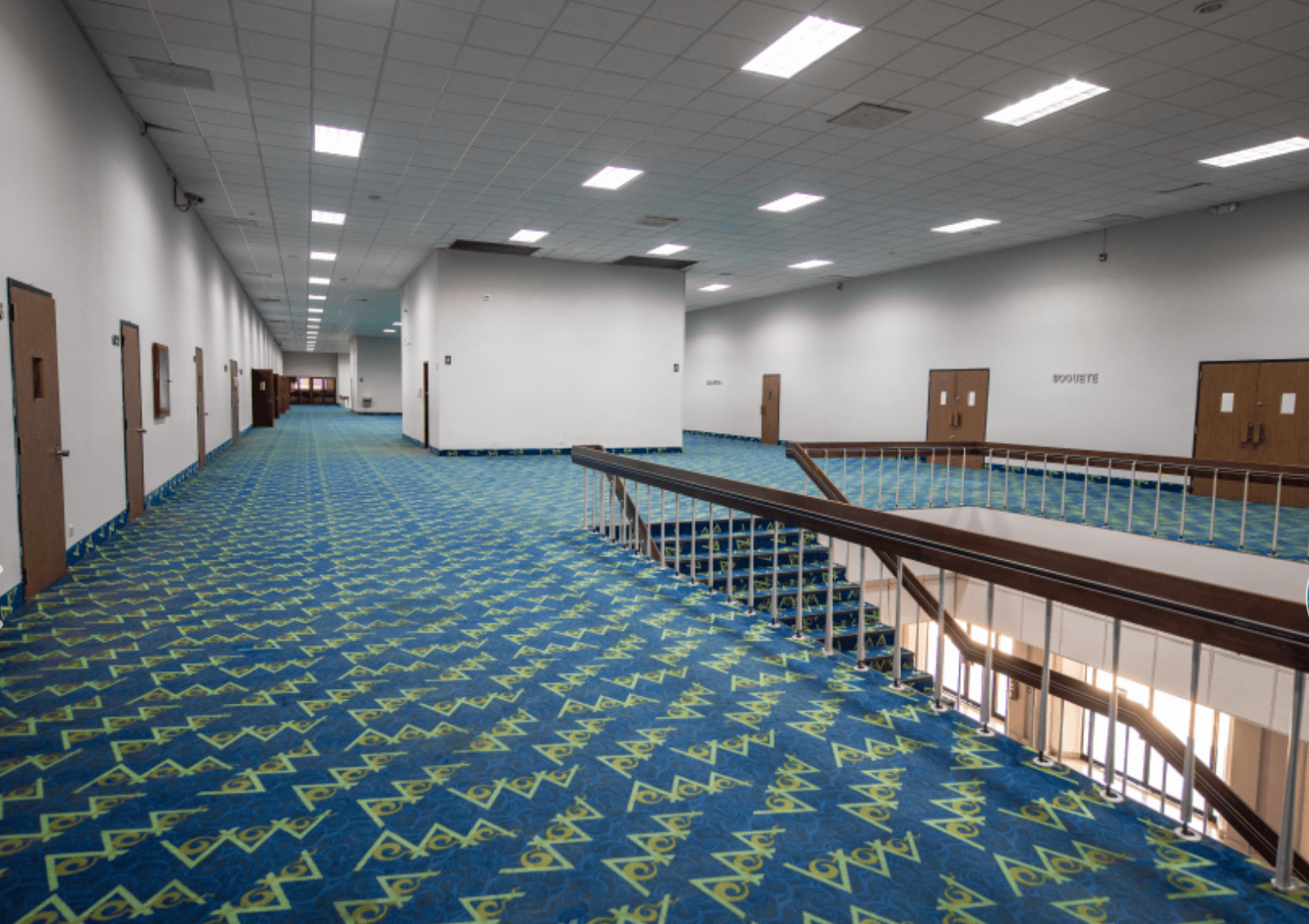
One of ATLAPA’s greatest strengths has always been its location. Situated in the San Francisco district of Panama City, it sits within an established business and hotel community with restaurants, banking, shopping, and visitor services all close at hand. More importantly, it functions as part of a convention campus rather than as a stand-alone building.
The Sheraton Grand Panama and the Aloft Panama are located immediately adjacent to the convention center. During a major convention, those hotels effectively become an extension of the program, providing additional ballrooms, meeting rooms, hospitality suites, and operational space that associations and larger conferences often consume long before the first delegate arrives. Board meetings, committee meetings, sponsor briefings, speaker preparation, media activity, and countless behind-the-scenes functions can all be accommodated without feeling disconnected from the main event.
From an operational standpoint, that relationship between the convention center and its surrounding hotels is one of ATLAPA’s greatest assets. It allows organizers to think beyond the walls of the convention center itself and create a campus environment where delegates, exhibitors, sponsors, and staff can move naturally between venues. For many association meetings, that flexibility can become just as valuable as the exhibition halls or general session rooms.
ATLAPA is also an example of how a convention center should never be judged solely by its age. Modern conventions rely heavily on technology, creative production, wide-format graphics, LED displays, and digital presentation systems that can transform almost any venue into a contemporary event environment. In today’s meetings industry, successful conventions are rarely remembered because the building was new. They are remembered because the experience was well planned and professionally delivered.
That doesn’t mean ATLAPA is the right choice for every program. Like every convention center, it has characteristics that will naturally suit some events better than others. However, if I were evaluating a destination for an association convention where operational efficiency, a headquarters hotel and an integrated convention campus were high on the list of priorities, ATLAPA would certainly deserve serious consideration.
Panama Convention Center
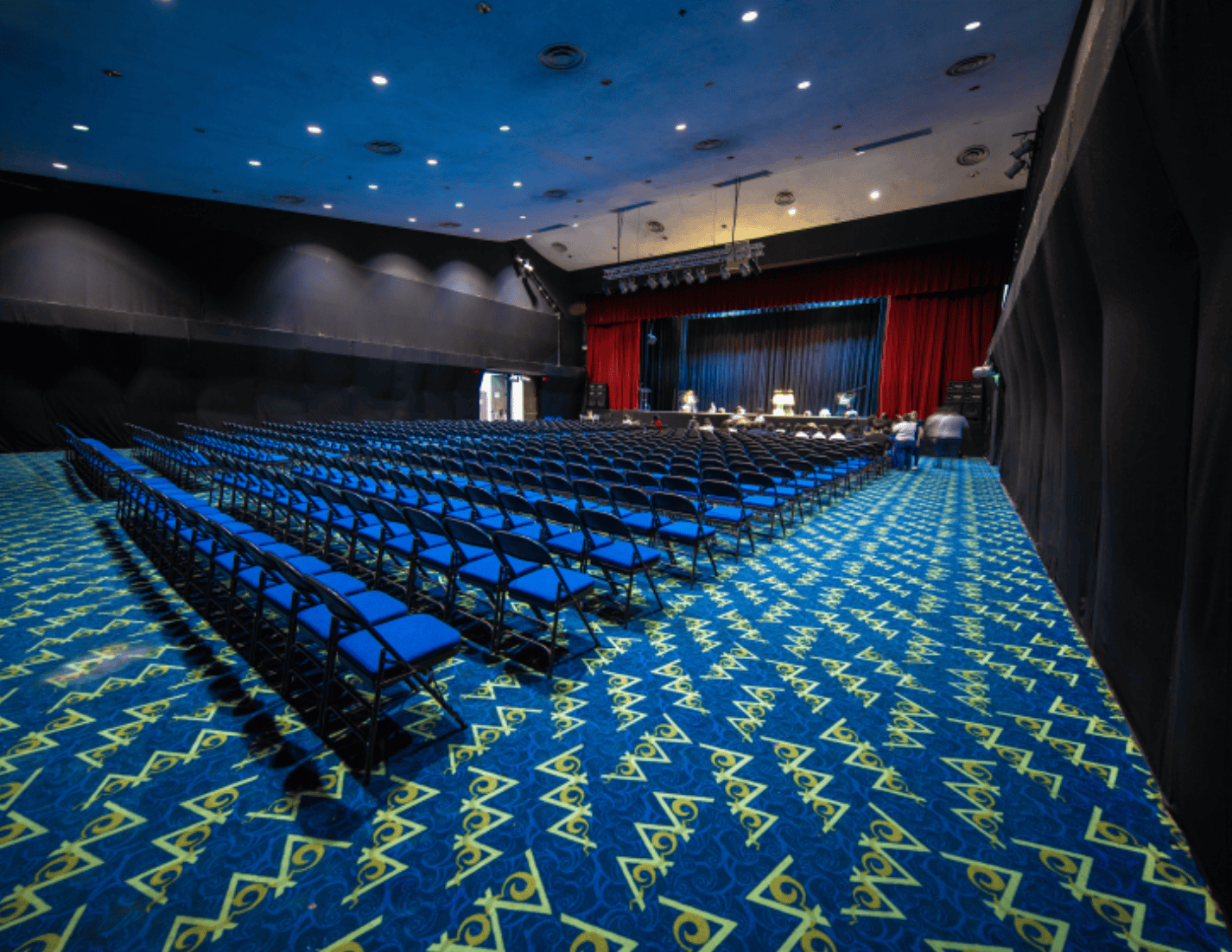
When the Panama Convention Center opened, it represented an important investment in the future of Panama’s meetings industry. The vision was clear: create a modern convention facility capable of attracting larger international conferences, exhibitions and events while reinforcing Panama’s position as one of Latin America’s leading business destinations.
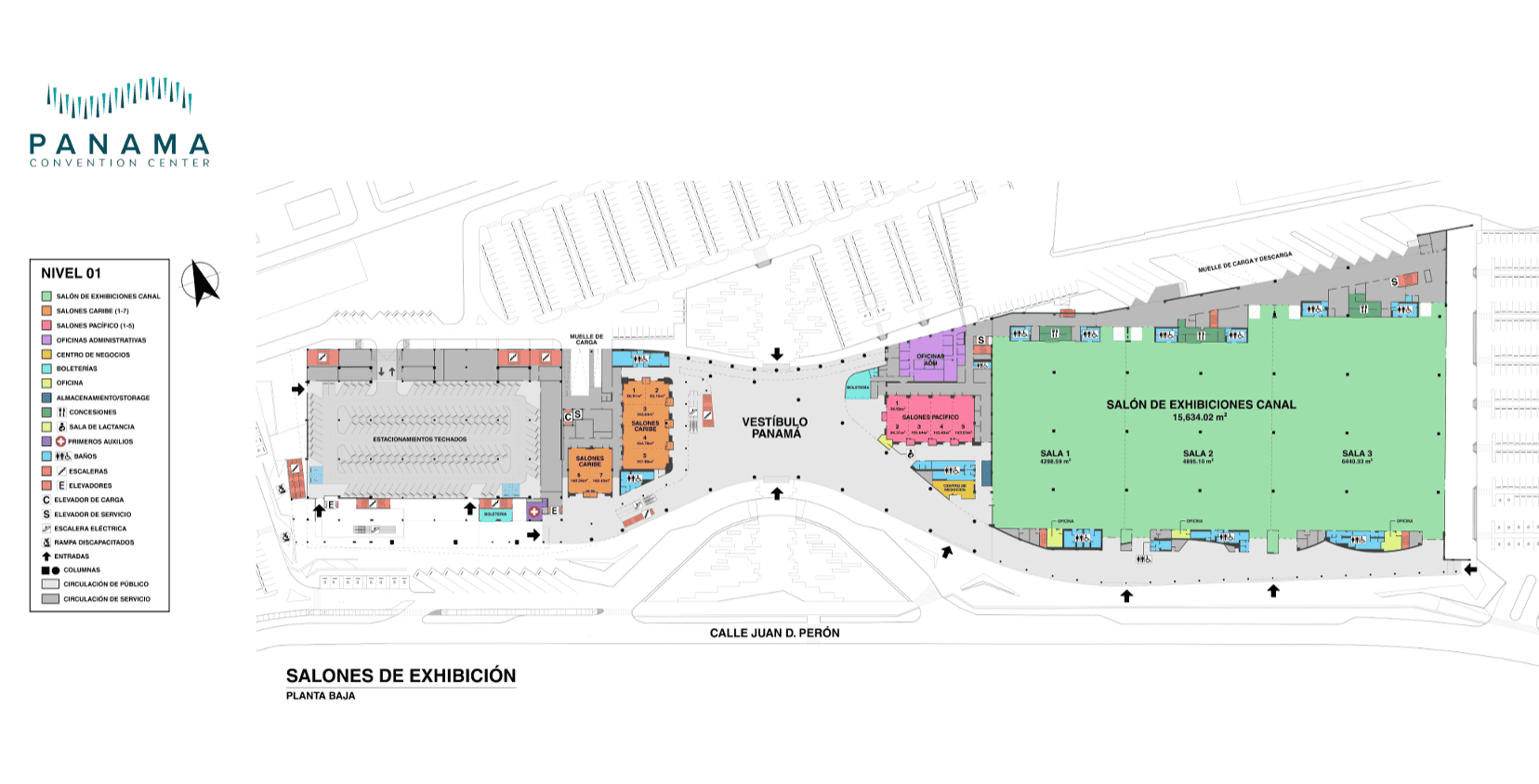
There is no question the building delivers an impressive first impression. Its location on the Amador Causeway provides views that few convention centers anywhere in the world can offer, and the surrounding area gives delegates access to attractions that can easily become part of the overall conference experience. For corporate meetings, international product launches, and incentive programs, that setting can become a genuine advantage, particularly when the destination itself forms part of the event.
From an operational standpoint, however, I think it’s important to recognize that not every meeting places the same demands on a convention center. A corporate conference is very different from an international association convention. Corporate delegates generally follow a structured program developed by one organization, with a single management team responsible for the agenda, communications, and decision-making. That gives the organizer a great deal of flexibility in how the building is used because everyone is working towards the same objective.
Association conventions are different, and that distinction is one of the reasons I believe meeting planners should carefully evaluate both of Panama’s convention centers before making a final decision. Associations create multiple layers of activity beyond the general sessions and exhibition floor. Board meetings, committee meetings, sponsor functions, continuing education, trade activities, and the many operational teams supporting the event all require space, coordination, and easy movement throughout the program. Those operational requirements should be part of every site inspection, regardless of which convention center is being considered.
That isn’t a criticism of the Panama Convention Center. It’s simply a reminder that every building has its own strengths, and every program has its own priorities. In my experience, the best decisions are made when those two things are matched together from the very beginning.

So, Which Convention Center Would I Recommend?
After reading this far, you may be expecting me to tell you which of Panama’s two convention centers I would choose.
The honest answer is that I wouldn’t recommend one until I understood the programme.
As I look at Panama’s two convention centers, I can’t help but relate them to my own career. The Panama Convention Center reminds me very much of the Palm Springs Convention Center. Both are destination convention centers where the location itself becomes part of the experience. They naturally lend themselves to corporate conferences, leadership meetings, incentive programmes and events where delegates are encouraged to enjoy everything the destination has to offer beyond the meeting rooms.
ATLAPA gives me a very different perspective. It reminds me of my years at the Dallas Convention Center and the type of business that facility was built to serve. Large association conventions, educational conferences and citywide meetings often have very different priorities. The focus shifts towards delegate logistics, headquarters hotels, committee meetings, continuing education, exhibition space and the efficient movement of thousands of attendees. In many cases, those operational requirements become more important than the destination itself.
That’s why, whenever someone asks me which convention center I would recommend, my answer is always the same.
“Tell me about your programme.”
Once I understand the objectives of the meeting, the audience, the budget and the delegate experience the organiser wants to create, the right recommendation usually becomes obvious.
After more than forty years in hotels and convention centers, I’ve never believed there is a “best” convention center.
There is only the convention center that is best for your programme.
If this article encourages you to look beyond the brochure, ask better questions during your site inspection and think about how your event will actually operate once it arrives, then it has achieved exactly what I hoped it would.
Meeting Planner Insights
- Panama City has two major convention centers located within approximately 11 km (7 miles) of each other, but they were developed during different periods and serve different operational needs.
- Choosing the right convention center is one of the earliest and most important planning decisions because the physical characteristics of the building cannot easily be changed once contracts are signed.
- Association conventions typically place the greatest operational demands on a convention center, requiring numerous meeting rooms, committee space, sponsor areas, education rooms and extensive back-of-house support.
- Corporate meetings and incentive programs often have different priorities, focusing more on executive presentations, company culture and production quality than large numbers of concurrent meetings.
- A successful convention depends on far more than the exhibition hall. Registration, delegate movement, catering, production, security, transportation and logistics all influence the attendee experience.
- ATLAPA benefits from its integrated convention campus, with nearby hotels providing additional meeting space and operational flexibility for larger events.
- The Panama Convention Center offers a modern international venue with significant exhibition space and a distinctive waterfront location on the Amador Causeway.
- Technology has transformed older convention centers. LED walls, digital projection, wide-format graphics and modern lighting can dramatically change the appearance and functionality of a venue.
- Meeting planners often begin evaluating destinations three to seven years before a major convention, particularly for international association meetings.
- The most successful convention center is rarely the newest one. It is usually the building that best supports the objectives and operational requirements of the event being planned.
Questions Meeting Planners Often Ask
Panama developed two convention centers to serve the country’s growing meetings industry. Although they are located relatively close to one another, they were developed at different times and offer different operational advantages depending on the type of event being planned.
There isn’t a single answer. Association conventions often require extensive meeting space, committee rooms, sponsor areas, education sessions and a strong operational support network. The right choice depends on the specific program and how the venue supports those requirements.
Not necessarily. Modern facilities offer many advantages, but successful conventions are usually determined by how well the building supports the event rather than simply by its age or appearance.
A headquarters hotel often becomes an extension of the convention itself. It provides space for board meetings, sponsor functions, staff offices, VIP hospitality, speaker preparation and numerous behind-the-scenes activities before and during the event.
A headquarters hotel often becomes an extension of the convention itself. It provides space for board meetings, sponsor functions, staff offices, VIP hospitality, speaker preparation and numerous behind-the-scenes activities before and during the event.
Beyond the meeting rooms and exhibition halls, planners should evaluate delegate flow, registration areas, operational flexibility, nearby hotels, transportation, catering logistics and how well the venue supports the overall program.
Association meetings typically involve multiple committees, continuing education, sponsor activities, exhibitions, and independent member organizations. Corporate meetings generally operate under a single management structure with a more unified program.
Many international association conventions are planned and awarded between three to seven years before the event takes place, allowing organizers sufficient time to secure venues, hotels, and local partners.
A convention may involve thousands of delegates, exhibitors, contractors, and suppliers working simultaneously. Good operational flow allows those activities to take place efficiently while remaining largely invisible to attendees.
Yes. Proximity to hotels, restaurants, transportation, attractions, and other visitor services can influence delegate convenience and the overall success of the program, depending on the objectives of the event.
Rather than asking, “Which convention center is better?”, ask “Which Convention Center gives my program the greatest opportunity to succeed?” That question has guided my thinking throughout more than forty years in the meetings industry, and it remains the best place to begin any venue evaluation.
Final Thoughts on Panama Convention Centers
Throughout this article, I’ve deliberately focused on Panama’s two convention centers because they are among the most important decisions a meeting planner will make. They are not, however, the only factor that determines whether a convention succeeds.
Every successful convention relies on an extraordinary level of cooperation between dozens of organizations. Convention and Visitors Bureaus, destination management companies, hotels, airlines, transportation providers, decorators, production companies, exhibitors, drayage and storage companies, utility providers, local municipalities, police, fire, emergency services, and countless others all contribute to the delegate experience. The convention center is simply one part of a much larger operational network, and every part has to perform at a high level.
From my experience, the best convention centers don’t operate in isolation. They become the hub that allows all of those moving parts to work together efficiently. When that happens, the building almost disappears into the background, and the focus remains exactly where it should be on the program, the delegates, and the destination.
That is why I encourage every meeting planner considering Panama to visit both convention centers and evaluate each against the needs of their program. Then ask yourself a few simple questions. Would you rather be approximately 25 minutes from the airport, with your headquarters hotel on your doorstep and most supporting hotels just 5 to 10 minutes away? Or spend valuable time moving delegates between the airport, hotels, and the convention center throughout the program? Those decisions influence every part of the event—from the opening General Session to departure day. Choose the right convention center and the program flows. Choose the wrong one, and you’ll spend the week working around the building instead of letting the building work for you.
Thank You for Reading
Thank you for taking the time to read this guide. Panama’s two convention centers offer very different opportunities, and the right decision will always come down to the programme, the operational requirements and the experience you want to create for your delegates.
For planners, organisers and visitors who would like to understand Panama City beyond the convention floor, the following guides provide additional perspective on the destination:
A practical guide for making the most of a limited stay in Panama City, including where to go, what to prioritise and how to use your time well.
Discover how one of Panama City’s smallest districts became one of its most important cultural, social and hospitality destinations.
Explore the history, development and growing importance of the waterfront district surrounding the Panama Convention Center.
I hope this guide helps you arrive in Panama better informed and prepared to ask the questions that matter.
James P. Rice
Founder & Publisher, CascoViejo360.com
info@CascoViejo360.com
Casco Viejo Walking Tour
Explore Casco Viejo at your own pace with a flexible self-guided walking route designed for your phone.
- No groups, no schedules
- Start anywhere, stop anywhere
- Works on phone or desktop
Panama City In 24 Hours
A carefully paced local itinerary for travelers with limited time who still want to experience Panama properly.
- Arrival day made simple
- Rooftops, dining & local rhythm
- Smart airport timing
Three Nights & Four Days
A flexible Panama itinerary centered around Casco Viejo, designed to help you arrive calmly and plan with confidence.
- Casco Viejo as your base
- Smart day trips and dining
- Timing without overplanning
Meetings in Casco Viejo, Panama
For planners looking beyond ballrooms. Boutique hotels, rooftop receptions, walkable dine-arounds, and real neighborhood character — this is how serious meetings get done here.
PLAN A MEETING HEREDestination Weddings in Casco Viejo
Historic churches, rooftop sunsets, colonial courtyards, and everything within walking distance. If you’re considering Panama, start here before you make a single call.
EXPLORE WEDDINGSCasco Viejo Boundaries
Where Casco truly begins, where it ends, and why that matters. If you’re booking a hotel, planning an event, or buying property — this distinction is important.
UNDERSTAND THE MAPJames P. Rice
James P. Rice purchased a home in Casco Viejo in 2008 and brings more than 40 years of hospitality, restaurant, tourism, and convention industry experience to CascoViejo360.com.
His background includes leadership positions with Ritz-Carlton and Hyatt Hotels, executive roles with major convention centers, and ownership of restaurants and pubs in both the United Kingdom and the United States.
Every article, hotel, restaurant, rooftop venue, attraction, and experience featured on CascoViejo360.com is selected through local knowledge, personal experience, and professional review, with careful consideration given to visitor experience, service standards, authenticity, and its contribution to the overall Casco Viejo and Panama City visitor experience.